A low machine total can leave a large installation bill outside the proposal. Compare stretch wrapper cost as three separate amounts: the configured machine, the work needed to put it into service, and the recurring expense of wrapping your loads.
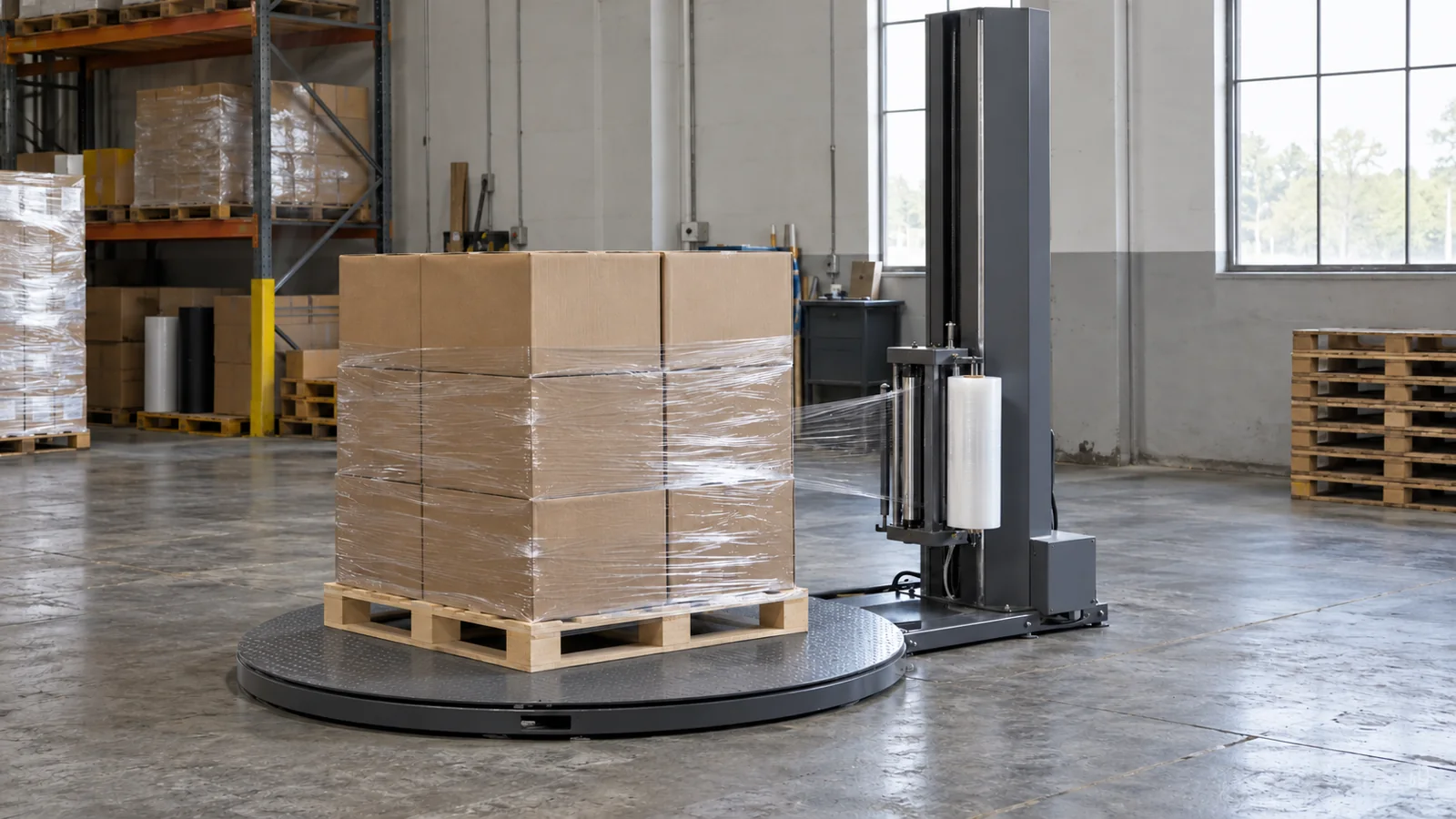
A pallet of plain brown cartons on a turntable wrapper, with floor space around the machine.
A comparable proposal needs a defined boundary, not just a price at the bottom. Mark each scope item included, excluded, or to confirm; name who supplies it; and attach the quotation line or document that supports the answer. This guide provides a blank worksheet and variable-only cost expressions. It does not publish current equipment prices, estimate your film consumption, or promise a payback period.
What must be the same before you compare totals?
Use the same load specification, project boundary, currency, and operating period for every proposal. Otherwise, an apparent saving may simply move work or expense into another budget.
| Input or item | Value or source to use | Why it matters |
|---|---|---|
| Loads to be wrapped | Your pallet and load drawings, revision dated | Establishes what each proposal must handle |
| Required output | Your operating schedule and accepted loads per period | Keeps recurring costs on the same basis |
| Machine configuration | Dated proposal and option schedule | Separates the base machine from additions |
| Infeed and discharge boundary | Approved layout and responsibility list | Identifies conveyor or truck work outside the machine |
| Site services | Unit documentation and site survey | Defines connection work that someone must supply |
| Commercial basis | Currency, tax treatment, delivery terms, validity date | Makes additions to the quoted total traceable |
If the wrapper configuration is undecided, first use the automatic pallet wrapper line-fit record to document pallet movement and the operator steps that remain. Bring that same record to each comparison. This cost worksheet starts once the proposed duties are clear; it does not select a machine for you.
Copy the blank quote-scope worksheet
Keep one worksheet per proposal and use identical item names across them. Download the blank stretch wrapper quote-scope worksheet (CSV). It contains the rows below plus blank columns for proposal ID, cost timing, unit, responsible party, inclusion status, amount, evidence, and next action. Open it in a spreadsheet or copy these tables into your purchasing record.
Use Included, Excluded, or To confirm in the status column. An empty amount is unknown, not zero. If an item does not apply, write why in the evidence column rather than quietly deleting it from one proposal.
| Cost item | Confirm the boundary | Evidence to attach |
|---|---|---|
| Configured wrapper | Machine, film carriage, controls, and selected options | Proposal revision and option list |
| Loading accessories | Ramp, weighing equipment, or other accessories if required | Itemized accessory schedule |
| Infeed and discharge | Conveyors, stops, transfers, and limits of supply | Marked layout and interface list |
| Freight and unloading | Delivery point, unloading, and internal movement | Delivery terms and handling plan |
| Floor and access work | Placement, fixing, clearance, and any building changes | Site survey and approved installation drawing |
| Electrical supply | Site circuit, connection hardware, and final connection | Unit wiring documents and contractor scope |
| Air supply, if required | Supply point, connection, and conditioning requirements | Unit requirements and contractor scope |
| Line controls and safeguarding | Signals, access boundaries, and integration responsibilities | Approved control and safety scope |
| Start-up and acceptance | Setup tasks, test loads, pass criteria, and repeat visits | Service scope and acceptance plan |
| Operator and maintenance training | Attendees, shifts covered, materials, and included time | Training schedule and service terms |
| Initial spares | Parts supplied with the project and replenishment owner | Parts list and separate order lines |
The table is a comparison aid, not a statement that every wrapper needs every item. Split a bundled line if it hides a different owner or billing basis. For example, freight to the receiving dock and moving the machine to its final position can be separate tasks even when both appear under delivery.
Add an evidence reference precise enough for another buyer to find: proposal revision, section or line, drawing revision, and the date of a written clarification. A verbal answer can guide a follow-up, but leave the status To confirm until it becomes part of the agreed scope.
Why installation and start-up need separate owners
A supplier’s start-up visit does not establish that all site preparation is included. Check the written division of work before assigning either its cost or its completion date.
Robopac USA’s service page, accessed 15 October 2026, lists preparation duties for its semi-automatic wrapper installation service: the equipment must be delivered and inspected, utilities and connection hardware must be available, and internal transport must be arranged. Its on-site protocol also calls for assistance with moving and placing the machine. These are terms for the service described on that page, not universal installation terms.
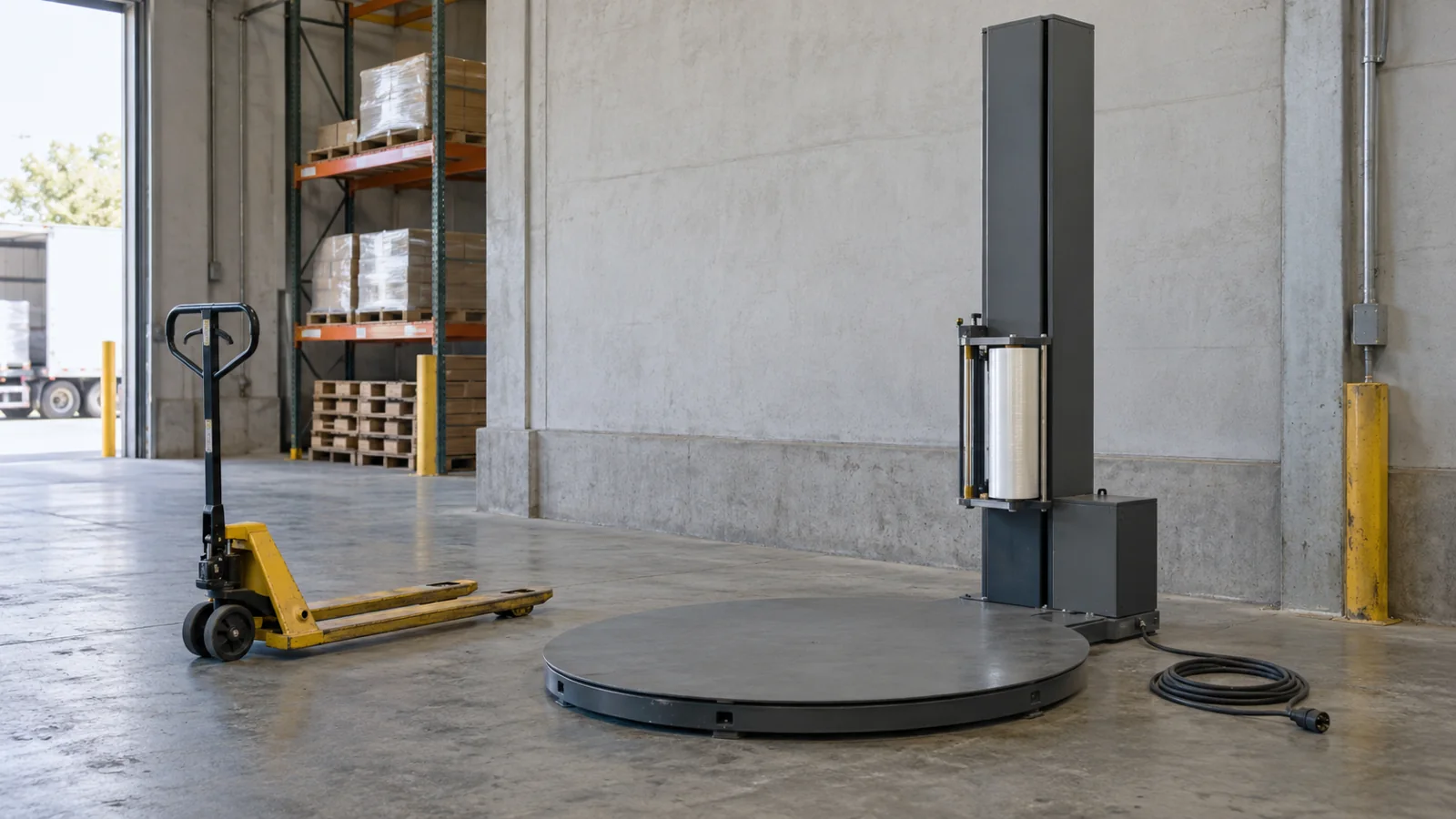
A pallet jack and coiled cable beside a stretch wrapper in a warehouse installation area.
That distinction gives you a practical question for each proposal: Where does the installer’s work begin, and who finishes everything before that point? Name the receiving team, facilities contractor, machine supplier, and line integrator only where your project actually uses them. The responsible party is a role or named organization; it is not automatically the person whose budget pays the invoice.
For unit requirements, use the documents for the exact configuration offered. The Masterplat manual’s installation sections distinguish connection recommendations, pneumatic connection, and electrical connection. Its electrical section directs checks against the identification plate and wiring diagram. Do not copy another machine’s utility rating into your site budget.
Likewise, the RT Automatic product page separately lists utility requirements and available options. This supports asking for both a utility schedule and an option schedule; it does not show what another supplier has included in your contract. Record connection values from the offered unit, with units and document revision, or leave them Unknown / verify on the unit.
For an integrated station, put the transfer and release boundaries beside the pallet handling interface record. Then assign the owner of each test in the commissioning and acceptance checklist. A successful machine demonstration and acceptance of the connected line can cover different work. If a proposal also includes a conventional palletizer, keep its load-building scope separate from the wrapper scope so the two stations are not charged to different boundaries in competing offers.
Keep operating costs in a separate section
Recurring costs need measured project inputs and a stated period. Do not add a yearly service amount to a monthly film amount, or treat a supplier’s general savings claim as your operating record.
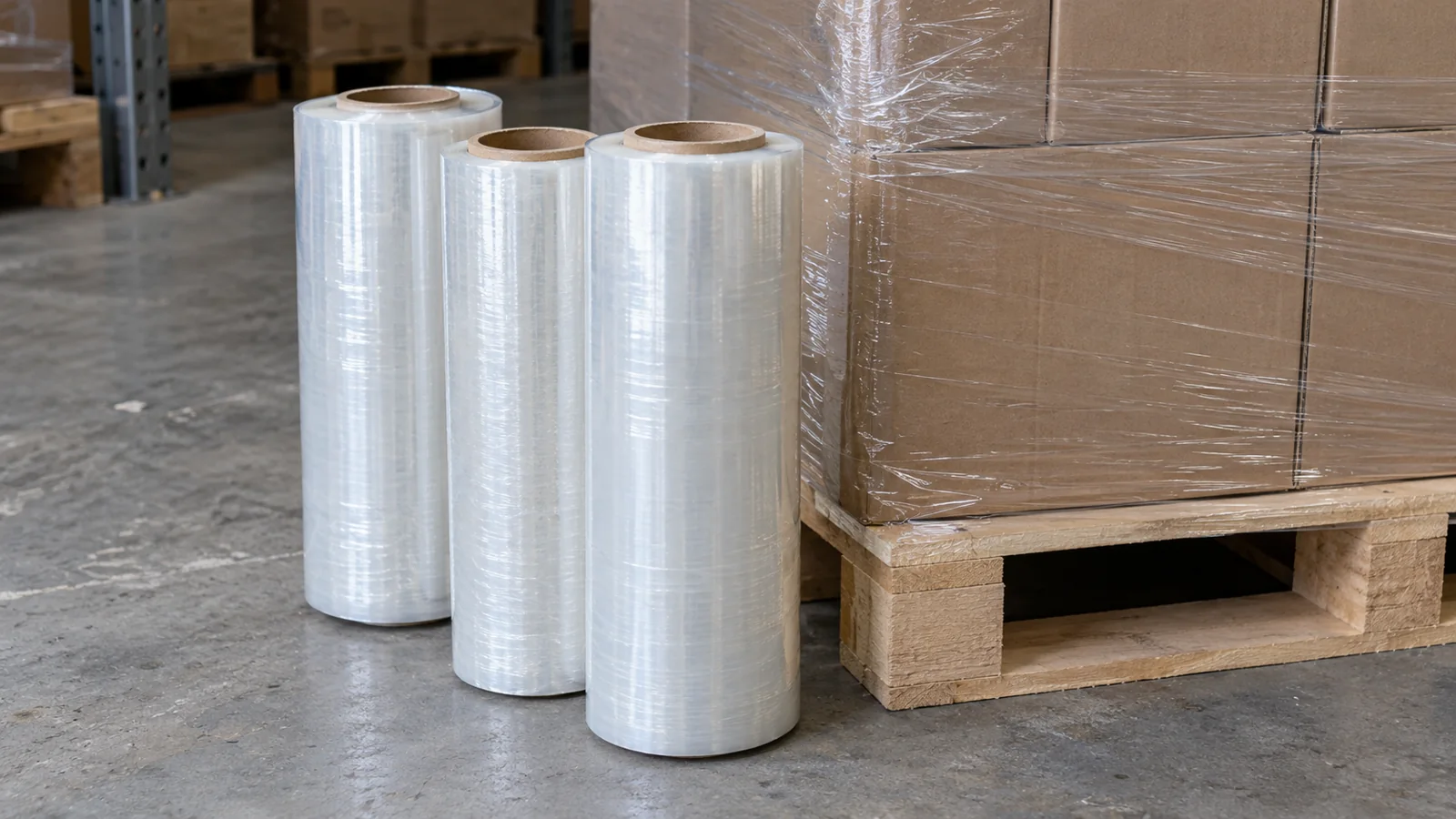
Clear film rolls with cardboard cores beside a partially wrapped pallet of cartons.
| Recurring item | Unit or basis to record | Evidence and unresolved question |
|---|---|---|
| Film | Mass per accepted load and currency per matching mass unit | Measured film record by load type; does it include discarded film? |
| Operator work | Paid hours and applicable hourly cost | Observed loading, attaching, cutting, changing rolls, and clearing interruptions |
| Electricity and air, if used | Metered consumption and applicable tariff basis | Which loads or operating period were measured? |
| Maintenance and replacement parts | Tasks, parts, frequency, and cost for the chosen period | Unit maintenance plan, service terms, and parts pricing |
| Service or software renewals, if applicable | Contract period, included support, and renewal amount | Written agreement; which items are optional? |
These are suggested accounting fields. Fill them from your records and the actual proposal. Robopac’s service page lists maintenance, training, extended warranty, and upgrades among after-sales services; that listing alone does not make them included in a machine purchase.
For labor, record what the person does for the whole station cycle. If the operator can perform another task while wrapping proceeds, separate occupied time from machine elapsed time. Freed time may improve capacity without reducing paid hours. Treat a payroll reduction as a separate business assumption that needs an owner and supporting plan.
For consumables, keep the load mix and accepted wrap condition attached to the measurement. A film-use comparison with a different load population or acceptance condition cannot establish an equivalent operating cost. This page supplies the accounting fields; it does not prescribe a film setting or a load-containment test.
Build totals only after closing the missing scope
Use the quoted machine amount as a starting point, then add the amounts needed to reach the same agreed installed boundary. An excluded item still belongs in the project total when your project requires it, even if a different organization will invoice it.
The following expressions describe this worksheet’s accounting method. They are not a valuation standard or a forecast:
- Comparable installed amount = quoted configured-machine amount + required project additions outside that amount.
- Operating cost for a stated period = film + operator labor + utilities + maintenance and parts + applicable recurring services for that period.
- Operating cost per accepted load = operating cost for the period ÷ accepted loads in the same period.
Do not double-count an option already included in the machine total or a service already inside another contract. Record how taxes and financing are treated separately so the comparison follows your organization’s accounting basis. Only calculate the per-load expression when the accepted-load count is known and greater than zero.
If a required addition has no amount, show a known subtotal and keep the missing item visible. Calling that subtotal the full installed cost would erase the very gap this worksheet is meant to expose. For a buyer comparing alternatives, the next useful result may be a short list of unresolved items rather than a ranked price table.
Close the comparison with written clarifications
Review the worksheets row by row before comparing their totals. A proposal is ready for a purchasing decision when its remaining uncertainties are explicit and the decision owner understands their effect.
- Match the load specification, configuration, commercial basis, and period on every sheet.
- Resolve each To confirm item with the party responsible for supplying or performing it.
- Obtain separate amounts for required excluded work and attach their evidence references.
- Check for duplicate charges where equipment, installation, and service scopes overlap.
- Keep unresolved items beside the known subtotal; decide who must close them and by when.
Take the completed record to your actual suppliers and internal project owners. This independent editorial site does not price equipment or assess proposals. Return to the packaging guides for the related selection, layout, and commissioning resources when a scope question leads outside this worksheet.
Method and sources
Updated October 2026. This worksheet was compiled from manufacturer service information, a product specification page, and the Masterplat installation manual, all opened on 15 October 2026. Manufacturer terms apply only to the service or equipment described. The blank fields and cost expressions are editorial comparison aids; no project prices, time study, film trial, or payback calculation were produced for this article. The warehouse images show generic machines, handling equipment, and film rolls; they do not document a named installation or test.