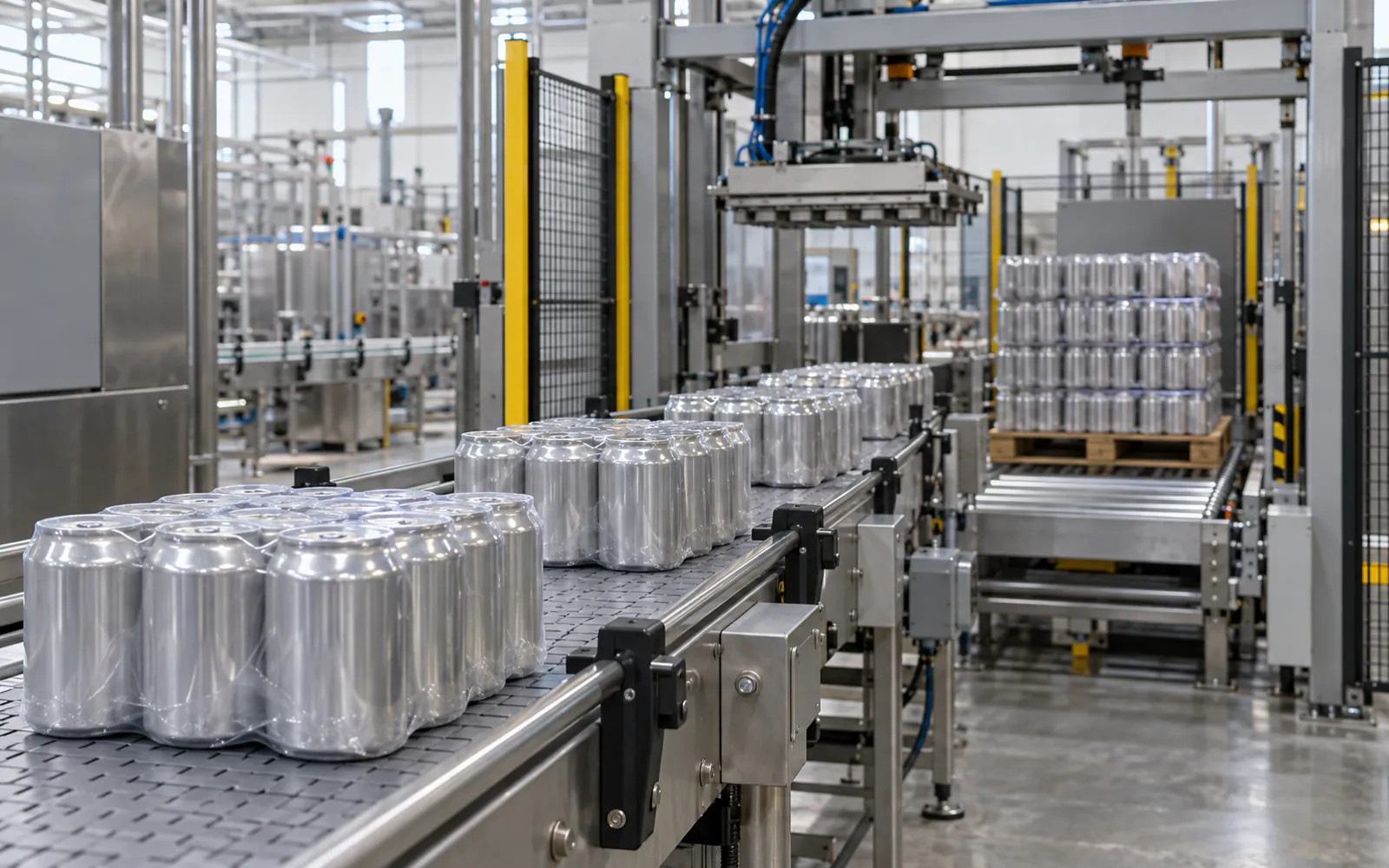
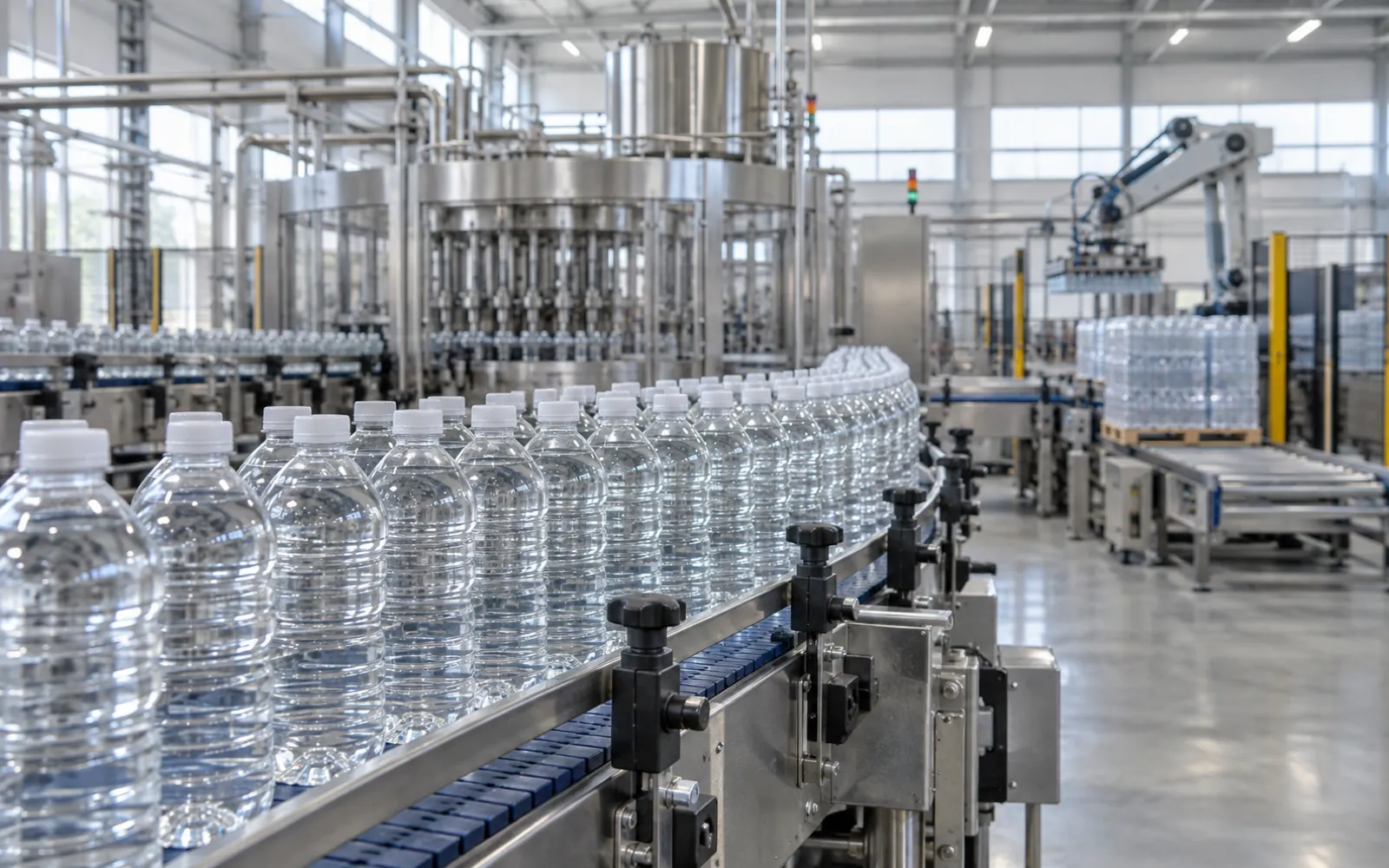
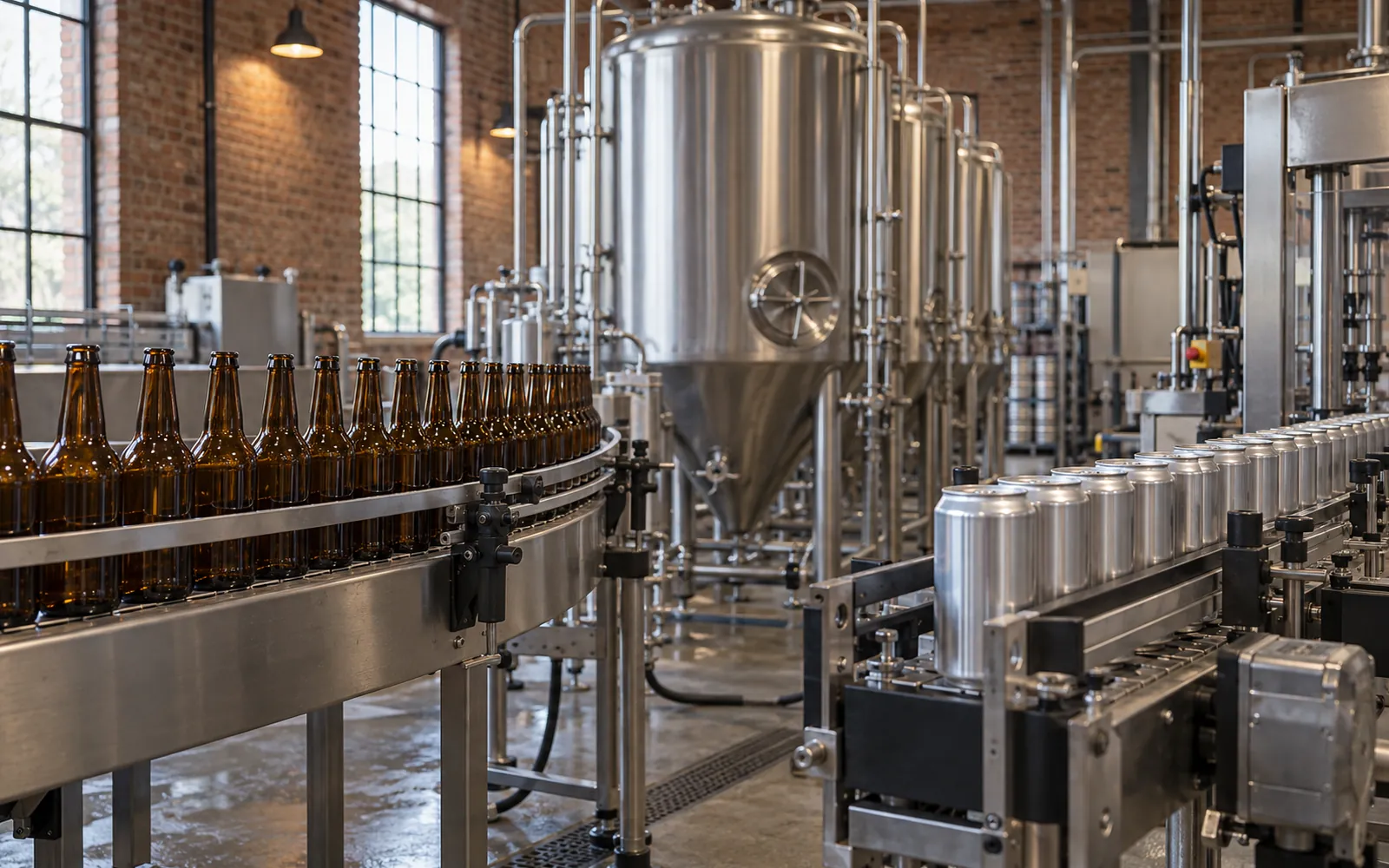
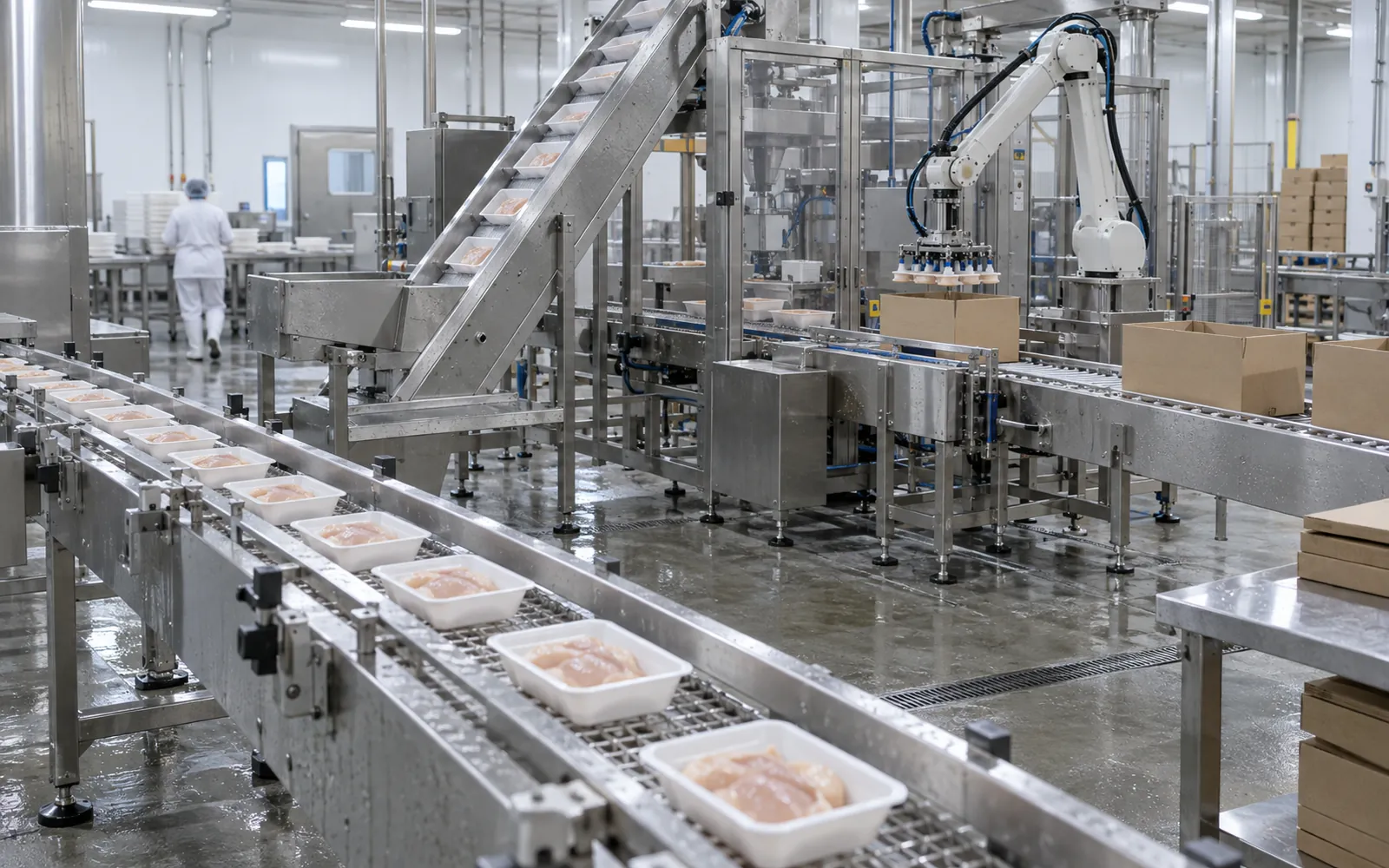
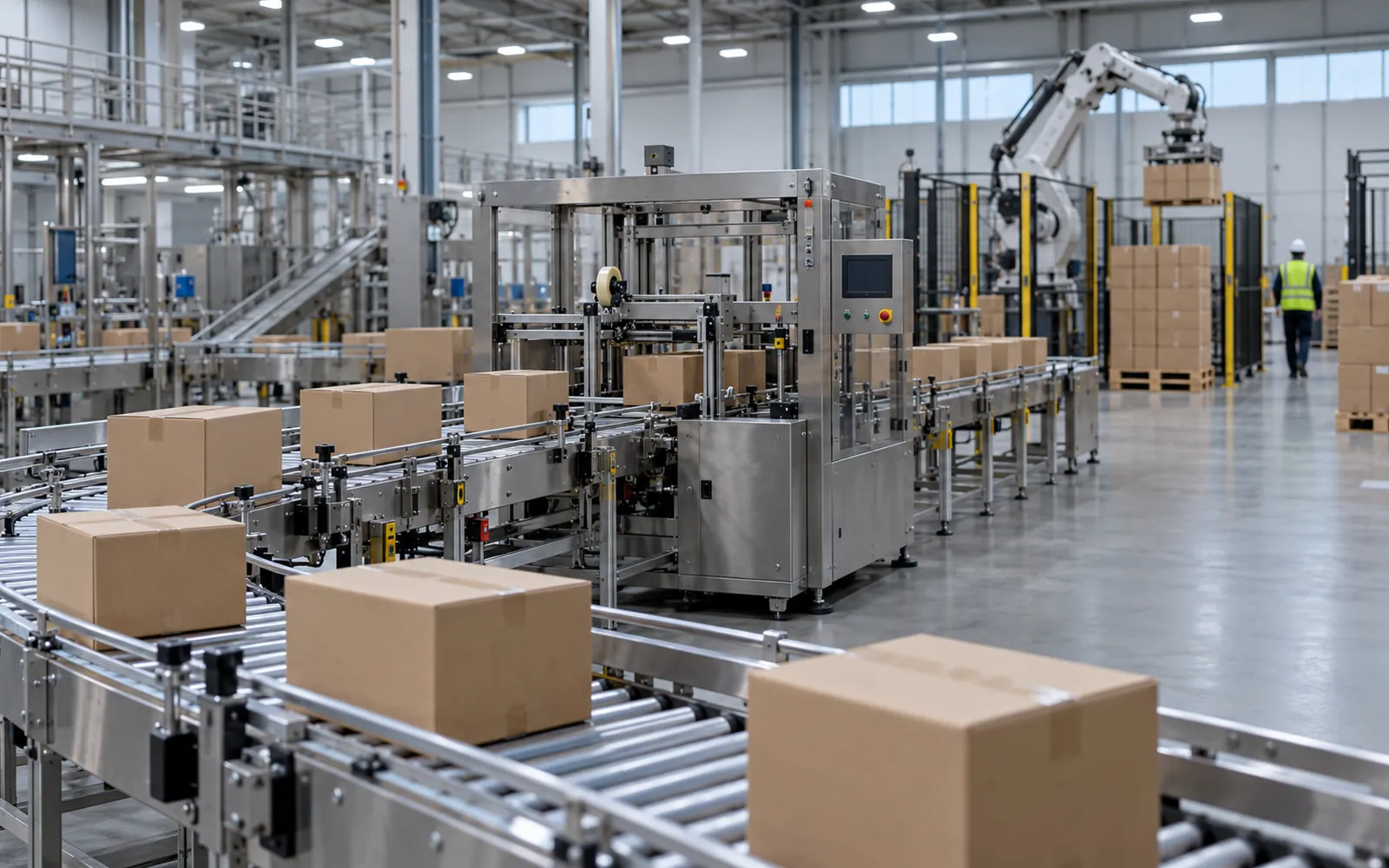
Every packaging line moves a product from a filler or former into a pack that can be shipped, but what the line looks like depends on what is inside the package. A canned drink behaves differently from a bag of frozen vegetables, and a craft brewery’s weekly schedule looks nothing like that of a plant filling one bottled water size all day. The four industry pages below follow those differences down to containers, hygiene, and the machines that suit each case.
Industry guides
- Beverage packaging automation: cans, PET, and glass at high rates, with wet floors, condensation, shrink multipacks, and the full stack from depalletizer to palletizer.
- Bottled water packaging line: very light PET bottles, air conveying, film bundles, large formats, and the rules for bottled drinking water.
- Brewery packaging line: cans, glass, and kegs on a small footprint, many formats, partitions for glass, and compact end-of-line automation added in stages.
- Food packaging automation: hygienic design, washdown ratings, allergen changeover, and chilled or frozen rooms.
How industries differ
The table shows what usually drives the equipment choice.
| Industry | Main drivers | Typical packs | Equipment emphasis |
|---|---|---|---|
| Beverage | Speed, wet areas, glass breakage | Shrink packs, trays, cases | Depalletizing, accumulation, high-rate palletizing |
| Bottled water | Light PET stability, low cost per unit | Film bundles, large-bottle layers | Air conveying, bundling, layer palletizing |
| Brewery | Many formats, small floor, small crew | Carriers, cases with partitions | Compact robotic cells, case packing |
| Food | Hygiene, allergens, cold rooms | Cases, trays, cartons | Washdown packers, sanitary conveyors |
The machine families are the same everywhere. The palletizing, depalletizing, conveyors, and end-of-line packaging sections describe them in detail, and the equipment overview maps all of them in one place. For layout and line integration questions, see packaging line integration.
Safety and hygiene references
Every industry has the same basic machine safety requirement. In the United States, OSHA’s general requirements for all machines cover guarding of nip points and rotating parts, and lockout/tagout covers servicing. Food and beverage plants also follow FDA’s 21 CFR Part 117 on current good manufacturing practice. Hygienic equipment design is addressed by 3-A and EHEDG guidance, which the food page covers. Each industry page lists the references that matter most for it.
Choosing where to start
If you are choosing a machine, start with the equipment pages. If you are designing a line, start with the industry page and the packaging line layout guide. For palletizer selection, use how to choose a palletizer. Three application pages cover container-level topics that cut across industries: bottle handling, case handling, and pallet handling.