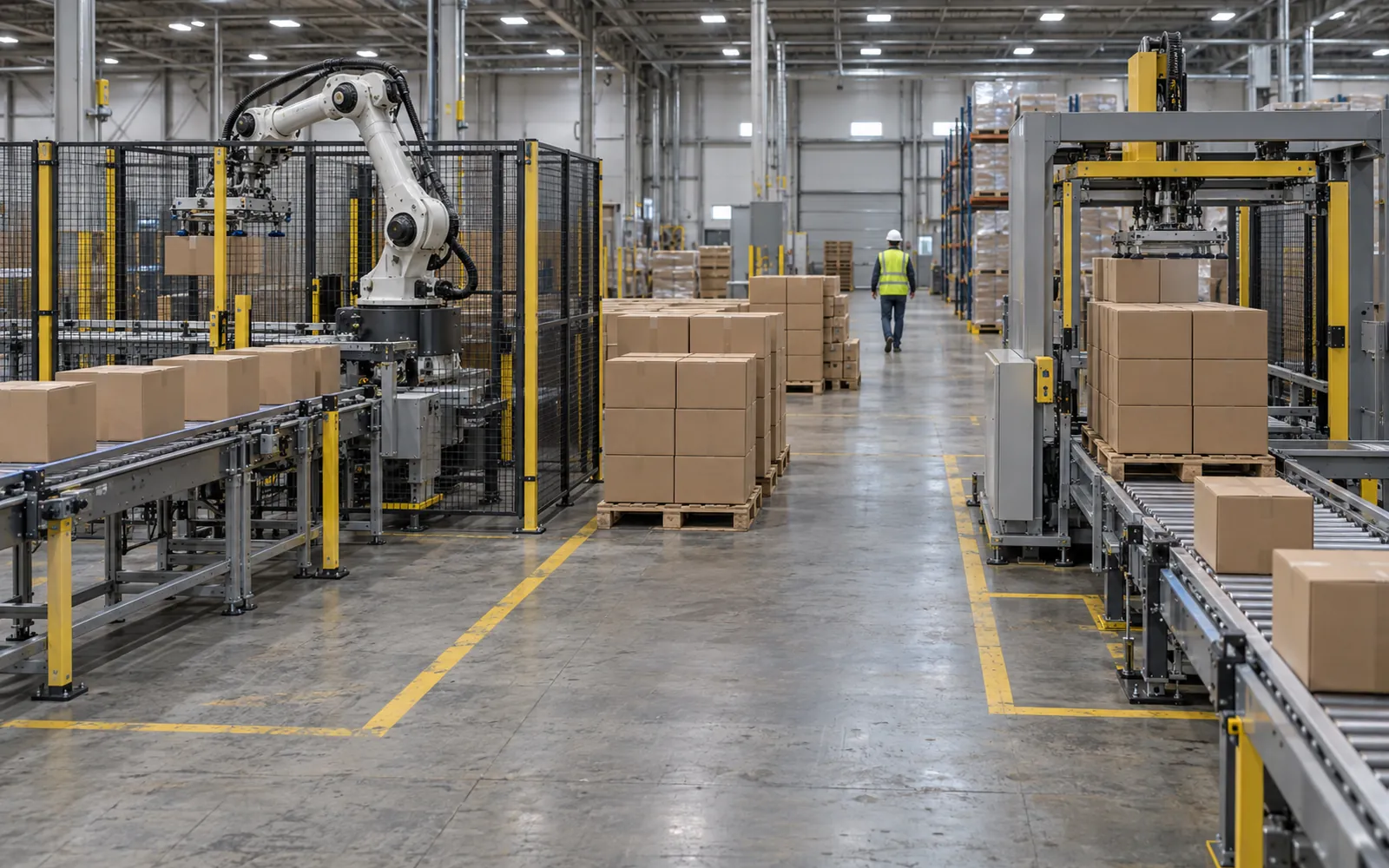
Robotic vs Conventional Palletizer
Compare robotic and conventional palletizers on speed, flexibility, footprint, maintenance, and cost of ownership, then use a short decision tree to choose.
Independent engineering resource
Independent guides to palletizing, depalletizing, conveying, and case handling, written for the engineers and buyers who specify, integrate, and run packaging lines.
Equipment map
Start with the equipment family, then narrow it down by package type, rate, and layout.
Package type, rate, payload, footprint, changeover, sanitation, and integration scope all narrow the options. Start from whichever angle fits your project.
Line integration
Most lines follow the same sequence after primary packaging. Every handoff is a place where rates, accumulation, and controls have to agree.
Start with three questions
Robotic cells handle many SKUs and frequent pattern changes well, while conventional high-level machines are often chosen for high sustained rates. The comparison guide works through speed, flexibility, footprint, and total cost of ownership.
Compare system typesBeverage lines run fast and wet, food lines add hygiene requirements, and breweries often switch between glass and cans, so the equipment changes with the product.
Engineering guides
Selection, cost, ROI, and layout guides that explain the variables instead of quoting a single number.
View all guides Compare robotic and conventional palletizers on speed, flexibility, footprint, maintenance, and cost of ownership, then use a short decision tree to choose.
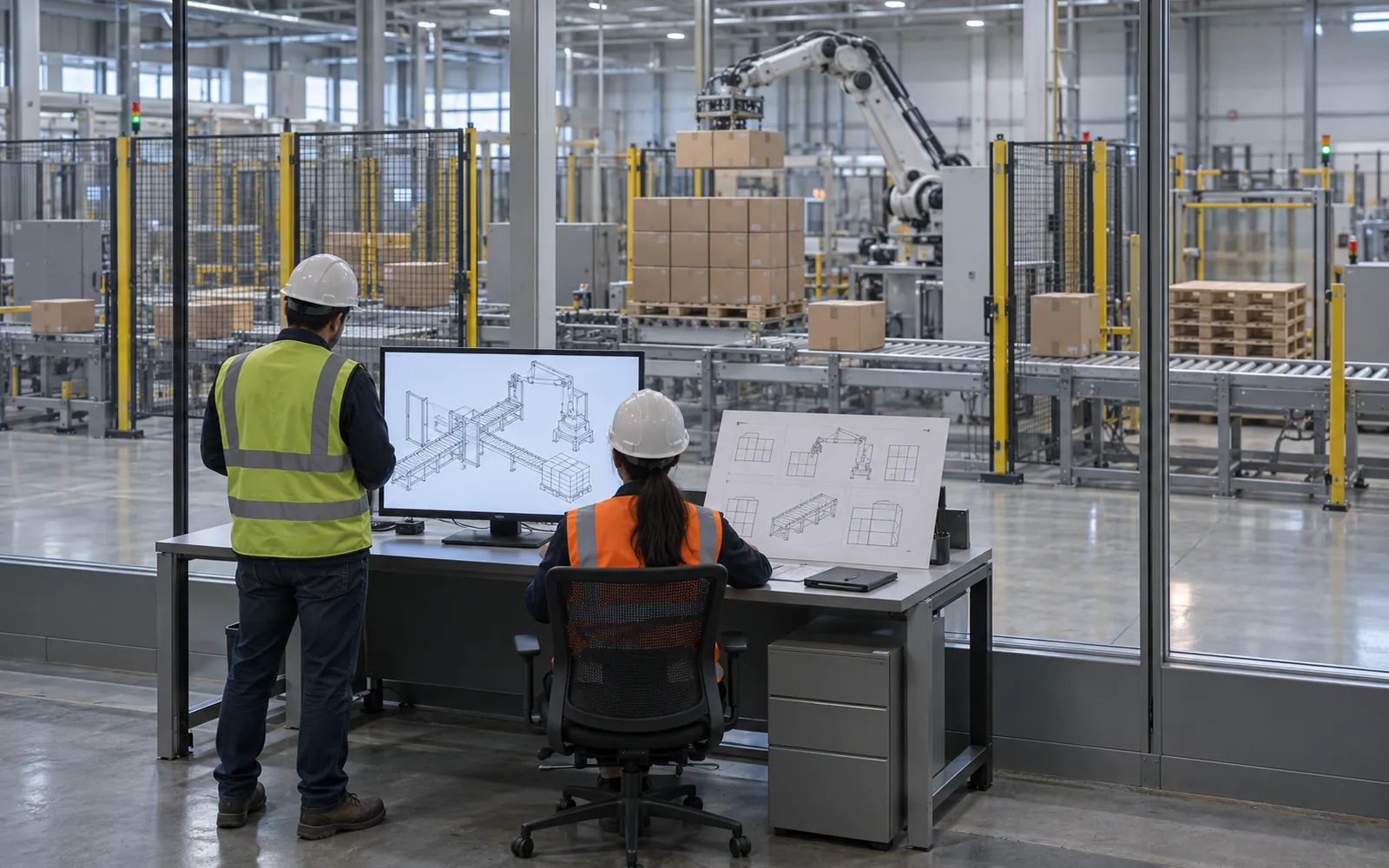
A palletizer selection guide: define the load, normalize speed claims, check changeover, compare complete scopes, and match the design to your line.
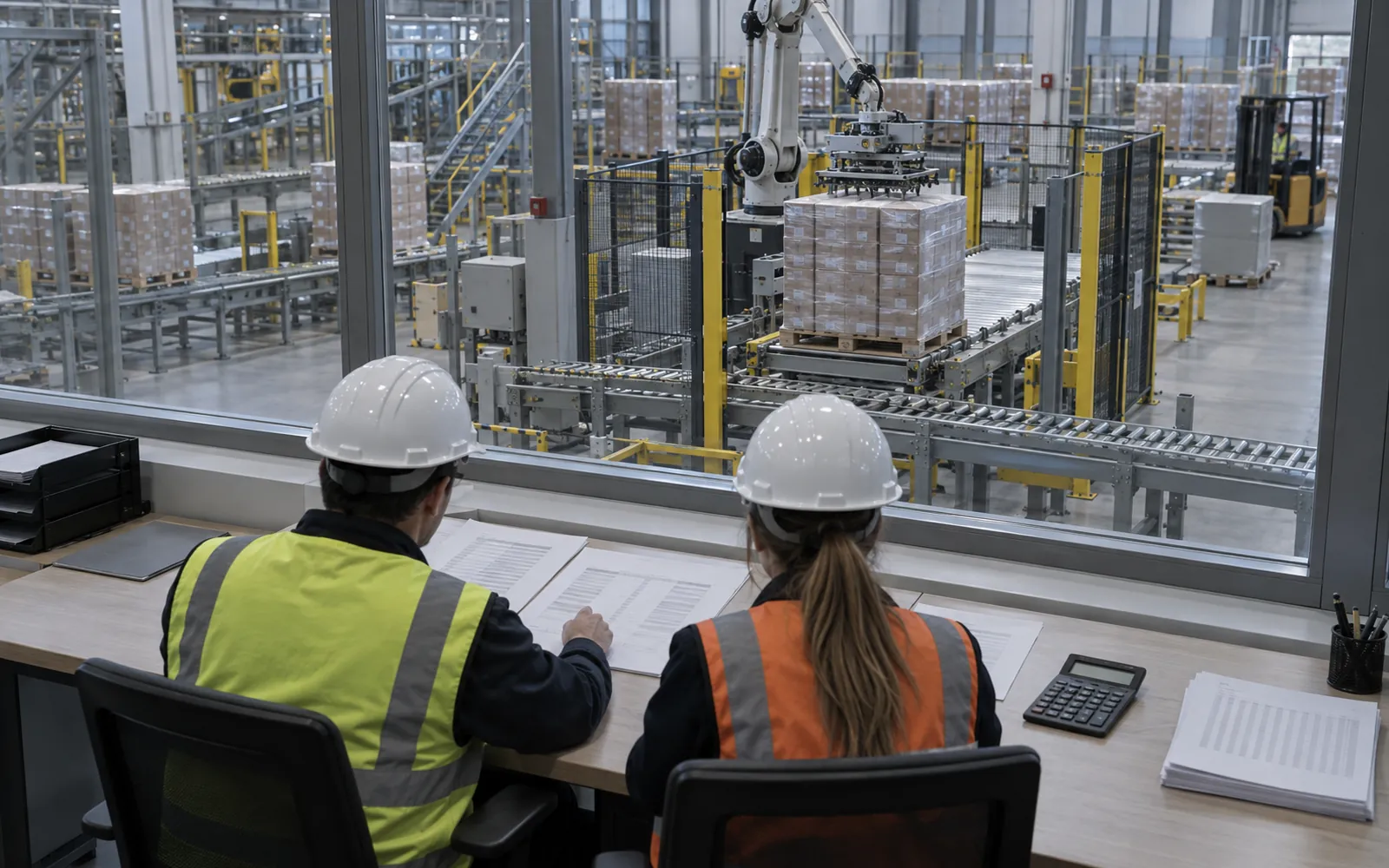
What goes into palletizer cost: components, the variables that move price, a payback formula, an illustrative worked example, and how to request comparable quotes.
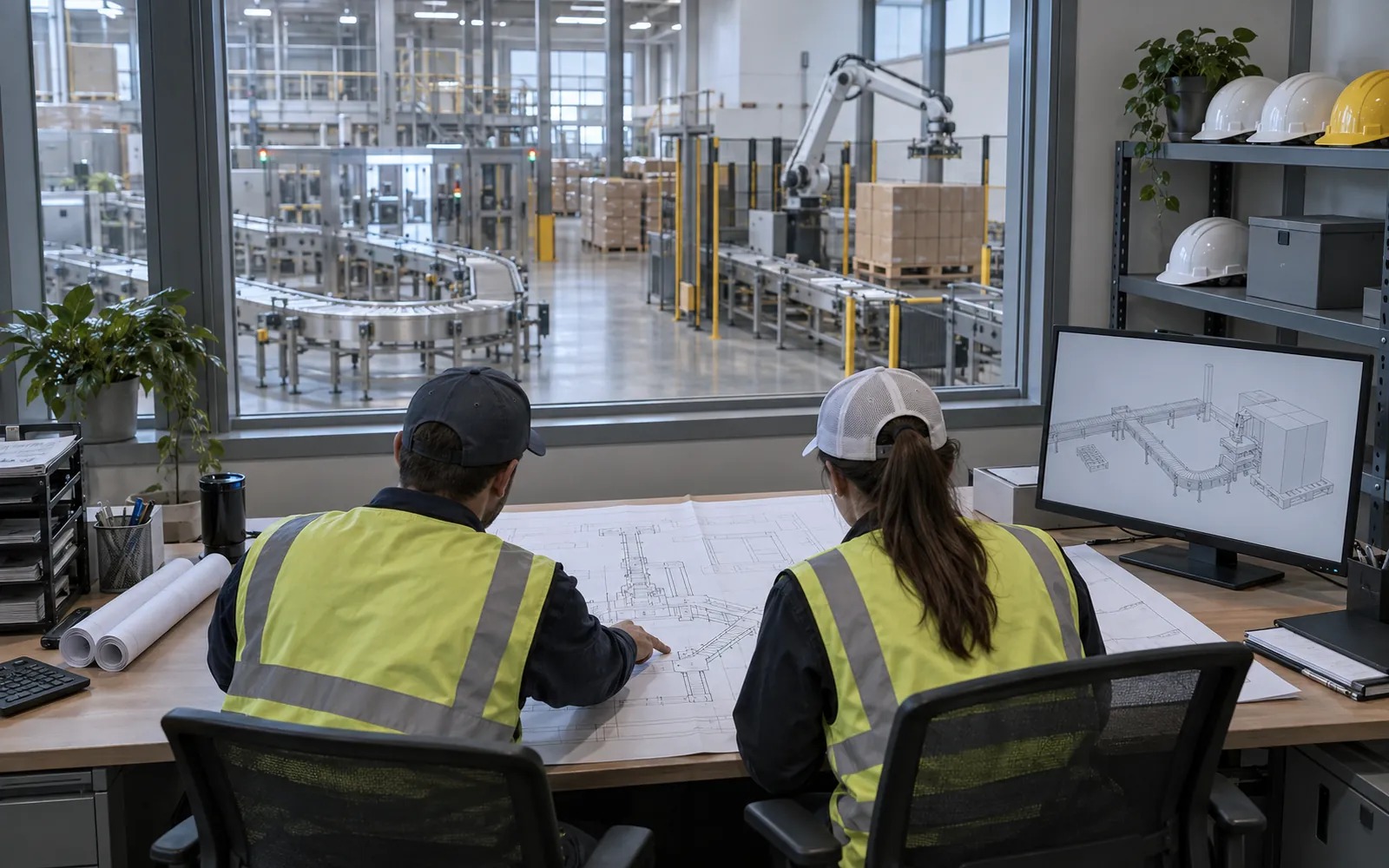
How case packer costs are built: kinematics, speed, format tooling, controls, commissioning, and total cost of ownership factors to verify before quoting.
Common questions
Short answers to the questions engineers and buyers ask most often, each linked to the guide that covers it in depth.
View all guidesIt is the equipment that turns filled, closed, and labeled products into loads that are ready to ship: case erecting, packing and sealing, conveying and accumulation, palletizing, stretch wrapping, and pallet labeling. Plants usually start automating where manual handling is heaviest or where the line loses the most output.
End-of-line packaging overviewThe load decides more than the machine does. Robotic cells suit many SKUs, frequent pattern changes, and more than one infeed, while conventional high-level machines are often chosen for high, steady case rates on uniform packages. Compare both against your most demanding SKU and your most complex pattern.
Robotic vs. conventional comparisonEnough to ride through the short stops you expect without starving or blocking the next machine. A first estimate multiplies the longest stop you want to absorb by the rate of the machine that keeps running. The buffer also needs spare speed downstream so it can empty again afterward.
Accumulation conveyor guideThe machine price is only one part. Tooling, conveyors, guarding, controls integration, installation, commissioning, training, and spare parts all move the total, and each depends on rate, product range, and layout. The cost guides explain those variables and a simple payback calculation instead of quoting a single number.
Palletizer cost guideWrite the requirements down before the purchase order, run a factory acceptance test with your real cases, film, and pallets, and repeat the run with your own crew at site acceptance. Tie payment milestones to those tests so both sides work toward the same result.
Commissioning and acceptance checklistIndustry guides cover beverage, bottled water, brewery, and food lines. Application guides follow a single package or load across the whole line: bottles, cases, and pallets. Both point back to the equipment pages for the details of each machine.
Browse industry guidesHow we work
Priority One Packaging is an editorial resource and does not sell equipment. Each guide explains its assumptions and lists the sources behind it.