
Skipping acceptance moves defect correction from the supplier’s floor to your site. Commissioning records what was specified, what passed, and what remains open from purchase order through handover. Scale the checks to a single machine or a complete line.
| Stage | Gate / evidence to agree | Lead to name |
|---|---|---|
| Purchase order (PO) | Requirements, scope, test criteria and warranty trigger | Buyer / supplier |
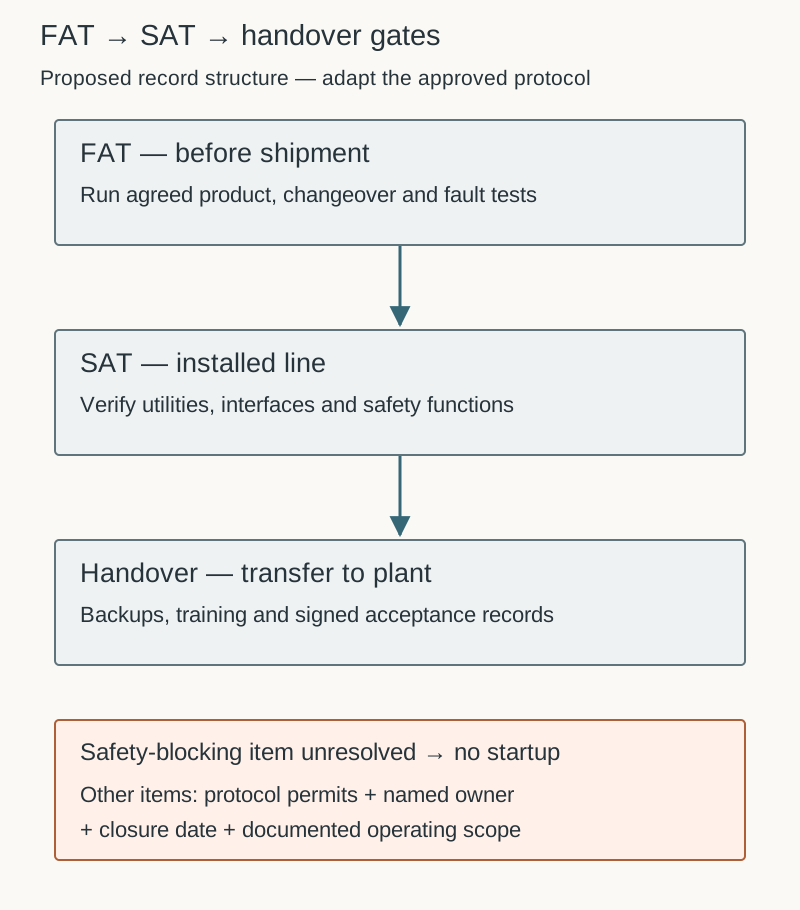
| Factory acceptance (FAT) | Product, changeover and fault tests; shipment-blocking deviations | Test signatories |
| Arrival / site readiness | Packing list, damage record, utilities and transfer checks | Plant engineering |
| Site acceptance (SAT) | Installed-line tests with plant materials and staff | Plant / supplier |
| Handover | Closed safety items, approved remaining items, backups and training | Plant owner |
Use the printable, copyable commissioning record below. The integration hub explains responsibility across suppliers.
What commissioning covers
Commissioning is often used to mean the days when a technician brings a machine to life on site. In practice it is wider. It begins when the requirement is written and ends when the machine has run long enough in production for both sides to agree it behaves as specified. Three terms are worth fixing early:
- Factory acceptance test (FAT). A structured test at the supplier’s plant, run against a written protocol, before the machine ships.
- Site acceptance test (SAT). The same idea repeated at your plant, after installation, with your utilities and production materials.
- Commissioning. The whole sequence of installation checks, startup, tuning, training, and handover that connects the two tests and puts the machine into service.
Each stage answers a different question. The FAT asks whether the machine as built matches the order. The SAT asks whether it works where it has to earn its keep. Commissioning in between asks whether people, utilities, and neighboring equipment are ready to support it. A project that skips the first test pays for every defect at the plant, and one that skips the second never learns whether the machine suits its surroundings.
Commissioning also creates a record. When a dispute arises over a missed rate or a late fix, the party with the better records usually has the better argument. Protocols, signed test sheets, fault logs, and photographs are how an agreement made months earlier stays visible.
Before the purchase order
Most disputes later in a project trace back to something that was assumed rather than written down. The purchase order stage is the cheapest moment to close those gaps, because the supplier is still competing for the work and every clarification costs only a conversation.
Requirement specification
Freeze a written requirement specification covering the products, the packaging materials, the required sustained rate, the pallet or case patterns, the formats you must change between, and the space the machine must fit. For a complete line, the turnkey packaging line page explains how a requirement specification becomes the base document for proposals and acceptance. The specification should also state how rate will be measured, because a rate quoted as a peak and a rate sustained over a shift are different promises.
Utilities and controls
Confirm the utilities the machine will draw: voltage, phase, frequency, and compressed air supply, plus any vacuum or cooling needs. State your preferred controls platform if you have one, because a plant that stocks and supports one family of controllers will not want to learn another for a single machine. Decide how the machine will report faults and counts to your plant systems, and agree the interface in writing.
Safety and documentation
List the safety requirements for the installation site, including guarding style, access doors, emergency stops, and how maintenance tasks will be locked out. In the United States, OSHA’s lockout/tagout standard at 29 CFR 1910.147 applies to servicing and maintenance where unexpected startup or stored energy could cause injury, so the design should support your energy-control procedures. For robotic machines, current robot safety standards shape the cell design, as the A3 article in the sources below explains. Ask for a documented risk assessment as a deliverable, not a courtesy.
Agree the documentation scope and the language for manuals and the operator interface. Request a recommended spare parts list, split into parts you should hold from day one and parts that can wait. Define the training you expect for operators and maintenance staff: how many people, how long, and whether it happens at the supplier, on site, or both.
Warranty and payment
Clarify warranty terms and, above all, what starts the warranty clock. Then tie payment milestones to acceptance tests, not only to dates. A schedule that pays on order, shipment, and delivery gives the supplier little financial reason to stay engaged once the machine is on your floor. Holding a meaningful portion until the site acceptance test and the end of early-life monitoring keeps attention where you need it. Cost conversations belong here too, and the palletizer cost guide shows which items are usually outside a base quote.
Factory acceptance test
The FAT is the best chance to find problems while they are cheap. The machine is assembled, the engineers who built it are in the building, and spare parts are a short walk away. Treat it as a test with a written outcome, not a demonstration.
Real samples
Ship real production samples to the supplier: cases, film, labels, pallets, and product or product stand-ins, in enough quantity for a meaningful run. A machine tested on clean, new, uniform cases may behave very differently with the cases you actually receive, which can be slightly bowed, dusty, or variable in size. If the real product cannot travel, agree a representative substitute and write down how it differs.
The protocol
Agree a written FAT protocol before anyone travels. It should state:
- the run duration and the target rate
- every product, case size, and pattern to be run
- at least one changeover, timed and performed by the kind of operator who will do it in production
- deliberate fault recovery, such as clearing a jam or restarting after an emergency stop
- safety device checks, including interlocks, light curtains or scanners, and emergency stops
- how stops and rejects will be counted and recorded
Running only the easiest product proves very little. Include the case size, film, or label most likely to cause trouble. For a palletizer, that means the least stable pattern and the lightest or most irregular case. A robotic machine should be shown on the robotic palletizer patterns you actually need, not only the standard one, and a case packer should run the smallest and largest formats in scope.
Pass criteria and attendance
Decide who attends and what counts as a pass before the test begins. Attendees should include an operator or line lead, a maintenance technician, someone from controls or engineering, and a safety representative. Pass criteria should be measurable: a rate over a defined period, a limit on stops of a given type, and a clean result on each safety check. Unresolved safety functions or hazards that make startup unsafe block startup unconditionally. Other non-safety items may remain open only when the agreed protocol permits, the permitted operating scope is documented, and an owner and closure date are assigned. Shipment approval is a separate contract gate. Name the ones that do block shipment in advance, so nobody argues about them at the end of a long day.
The how to choose a palletizer guide is a useful companion here, because the questions that shape the selection, such as pattern stability and changeover, are the same ones the FAT should confirm.
Shipment and installation readiness
Schedules slip quietly between FAT and startup. Use this period to close the gap between a machine that passed and a machine that is ready to install.
Before shipment, close the punch list, or document open items with agreed completion dates. Receive the electrical drawings, manuals, and software backups. Confirm spare parts are packed and listed. Check crating and match marks so reassembly on site is straightforward, and keep a photo or video record of the machine as accepted. That record settles later questions about whether a defect existed at shipment or arose in transit.
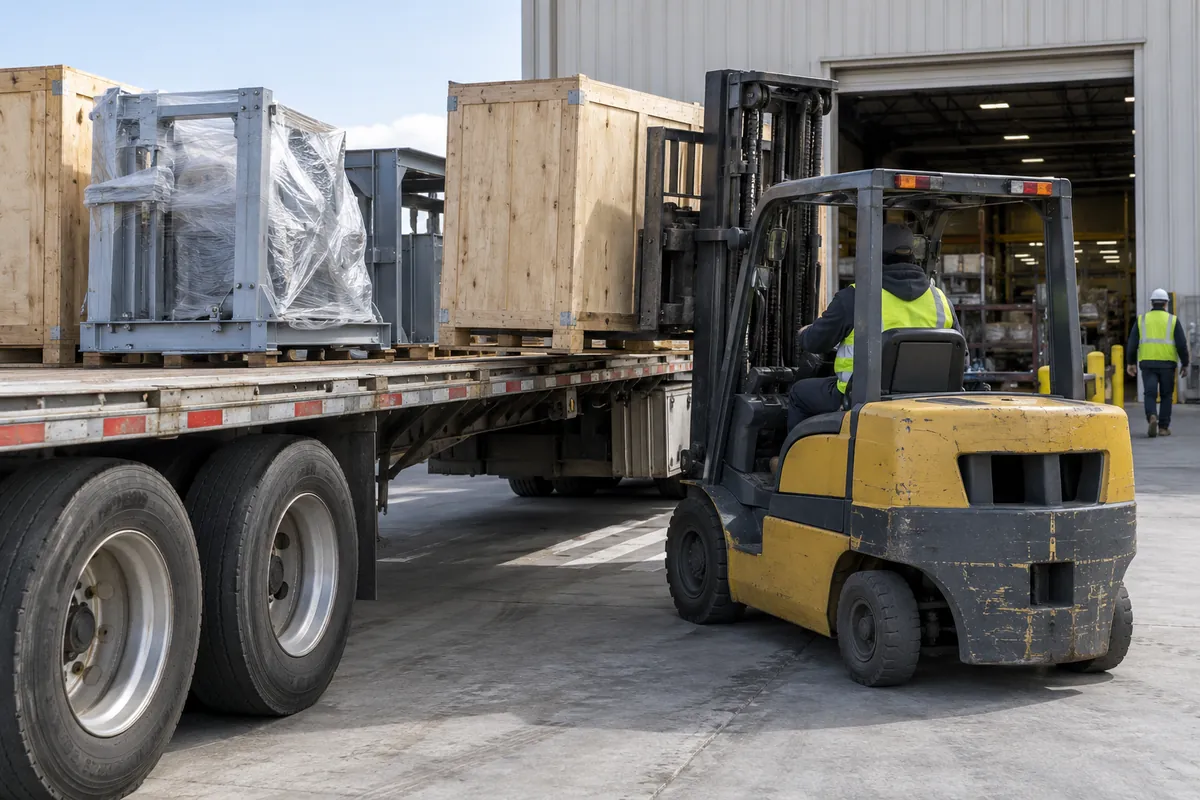
On your side, have the site ready before the machine arrives: floor condition and anchoring requirements, utilities brought to the point of use, clear access for the equipment to reach its position, and conveyor heights confirmed at the infeed and outfeed. Interfaces with neighboring machines are the usual source of delay, so review the packaging line layout and the line design assumptions again against the drawings the supplier sent. Inspect crates on arrival and note any damage on the delivery documents before the carrier leaves. Count the items against the packing list while the people who can resolve a shortage are still reachable.
Site acceptance test and startup
Startup is a sequence, and the order matters. First comes mechanical placement and leveling, then utilities and power connection, then safe power-up with guarding and emergency stops verified before any motion. Only then does the supplier’s technician bring up the controls, check the sensors and drives, and begin running empty cycles, then product.

Verify lockout points and stored energy at this stage, so the first maintenance task is already covered by a tested procedure. Test network and signal handshakes with the upstream and downstream machines with product present. A case conveyor with an accumulation zone that behaves correctly with an empty line can behave differently when it fills, so test the full and starved conditions as well as the nominal one. Where the machine is part of a food line, the food packaging context adds sanitation and washdown checks that belong on the SAT sheet.
Your own production staff should run the SAT with real materials, using the same protocol structure as the FAT. Repeat the key items: the sustained rate, the full product range, a changeover, fault recovery, and the safety checks. Record every stop and its cause during the run, including short stops that operators clear by hand.
Short stops are easy to dismiss during startup. Counting them gives an honest picture of how the machine behaves with your materials, and both sides get a shared record when deciding whether the test has passed. If a problem shows up only on site, compare it with the FAT record. Differences in case quality, film, floor vibration, or utilities will often explain it.
Handover documentation
Handover is when responsibility for daily operation moves from the supplier to your plant. It should happen against a list agreed in the contract, not by improvisation. The package normally includes:
- Mechanical, electrical, and pneumatic drawings in the agreed formats
- Operator and maintenance manuals in the agreed language
- A software, parameter, and recipe backup, stored somewhere your team controls
- The recommended spare parts list, with the parts actually supplied marked
- Safety documentation, including the risk assessment outcome and the lockout procedure
- Signed FAT and SAT records and the closed punch list
- Training records showing who was trained on what
Check the backup by asking whether it could restore the machine after a controller failure. A backup that has never been used is an assumption. Also confirm who holds the passwords and access levels, so the machine does not depend on one supplier technician who knows the access codes.
Training is part of handover, not a courtesy. Operators should have run the changeover and the fault recovery themselves before the supplier’s team leaves. Maintenance staff should have seen the lubrication points, the wear parts, and the common adjustments on the real machine.
Early-life monitoring
Acceptance is not the end of learning. The first weeks of production reveal what a short test cannot, such as how the machine copes with a poor material lot, a night shift, or a new operator.
Log faults and spare part use from the first day. Note each stop, its cause, its duration in plain terms, and who cleared it. This record speeds up warranty discussions, because you can show a pattern instead of describing a feeling. It also gives you better data for the specification of the next purchase.
Establish a qualitative overall equipment effectiveness baseline during this period. You do not need a precise figure to learn from it. Ask where the time went: waiting for upstream product, waiting for downstream space, planned changeovers, unplanned stops, or running below target speed. The answers show whether the machine is the limit or the line around it is, which links back to the buffering decisions in packaging line design.
Agree a review point with the supplier at the end of this period, with the fault log on the table. Close out any open warranty items, release the retained payment if the criteria are met, and note the lessons for the next project.
Common commissioning mistakes
- Testing only the easiest product. The test passes, and the first difficult case or film then stops production.
- No written pass criteria. A conversation at the end of the run replaces a measurement.
- Paying on dates instead of acceptance. The supplier loses its main reason to return when problems appear.
- Leaving the site unprepared. Utilities, floor, or conveyor heights are wrong on arrival, and the schedule slips for reasons unrelated to the machine.
- Using the wrong operators. A test run only by the supplier’s most experienced technician hides problems your shift will meet.
- Ignoring short stops. They look trivial in the moment and add up to the real loss of output.
- Accepting documentation later. Drawings and backups promised after startup often arrive late or incomplete.
- Skipping the safety checks. They are quick to verify at the FAT and expensive to correct once the machine is installed.
- Not keeping photographs and records. Without evidence, shipping damage, defects, and verbal changes become arguments.
Printable commissioning checklist
Copy or print the rows needed for the project. Enter pass / fail / N/A, the evidence filename, deviation class (safety-blocking / other / none), and actual closure date. A blank field is unresolved, not a pass. For paper use, copy each row into this compact record:
Stage / check: _____________________  Owner: ___________________
Result (pass / fail / N/A): _________  Evidence file: ____________
Deviation class / action: ______________________________________
Closure date / verifier: _______________________________________| Stage | Check and owner | Result | Evidence / file | Deviation class | Closure date |
|---|---|---|---|---|---|
| Purchase order | Written requirement specification frozen — owner: Buyer and supplier | ___ | Signed document; file: ___ | ___ | ___ |
| Purchase order | Utilities, controls platform, and safety needs stated — owner: Engineering | ___ | Specification clauses; file: ___ | ___ | ___ |
| Purchase order | Documentation, spares list, and training scope agreed — owner: Procurement | ___ | Contract schedule; file: ___ | ___ | ___ |
| Purchase order | Warranty trigger and payment milestones tied to acceptance — owner: Procurement | ___ | Contract terms; file: ___ | ___ | ___ |
| Before FAT | Real samples shipped in meaningful quantity — owner: Buyer | ___ | Shipping record; file: ___ | ___ | ___ |
| Before FAT | Protocol agreed with duration, rate, SKUs, changeover, faults, safety — owner: Both | ___ | Signed protocol; file: ___ | ___ | ___ |
| Before FAT | Attendees and pass criteria decided — owner: Both | ___ | Attendance list; file: ___ | ___ | ___ |
| FAT | Run completed and every stop recorded — owner: Buyer | ___ | Test sheet; file: ___ | ___ | ___ |
| FAT | Safety devices verified — owner: Safety lead | ___ | Safety checklist; file: ___ | ___ | ___ |
| Before shipment | Punch list closed or dated — owner: Supplier | ___ | Punch list; file: ___ | ___ | ___ |
| Before shipment | Drawings, manuals, and backups received — owner: Engineering | ___ | Document register; file: ___ | ___ | ___ |
| Before shipment | Spares packed, crating and match marks checked — owner: Supplier | ___ | Packing list, photos; file: ___ | ___ | ___ |
| Site readiness | Floor, utilities, and conveyor heights confirmed — owner: Plant | ___ | Site checklist; file: ___ | ___ | ___ |
| Arrival | Crates inspected and counted against the packing list — owner: Plant | ___ | Delivery notes; file: ___ | ___ | ___ |
| Startup | Guarding, emergency stops, and lockout verified before motion — owner: Safety lead | ___ | Startup record; file: ___ | ___ | ___ |
| SAT | Run with own operators and real materials — owner: Plant | ___ | Test sheet; file: ___ | ___ | ___ |
| SAT | Changeover and fault recovery performed by operators — owner: Plant | ___ | Test sheet; file: ___ | ___ | ___ |
| Handover | Documentation package complete and backup tested — owner: Engineering | ___ | Signed handover; file: ___ | ___ | ___ |
| Handover | Training records signed — owner: Supplier | ___ | Training log; file: ___ | ___ | ___ |
| Early life | Fault and spare use logged from day one — owner: Maintenance | ___ | Fault log; file: ___ | ___ | ___ |
| Early life | Qualitative OEE baseline and review meeting held — owner: Operations | ___ | Review notes; file: ___ | ___ | ___ |
| Closeout | Retained payment released on criteria met — owner: Procurement | ___ | Acceptance certificate; file: ___ | ___ | ___ |
Assumed decision example, not a real test. The approved SAT protocol requires a guard-interlock check and a manual in the agreed language. If the interlock test fails, record fail; safety-blocking; evidence: SAT-interlock-log; closure: open and prohibit startup until corrected and revalidated. If the interlock passes but the manual’s index needs correction, record pass for the safety check; other deviation for the index; owner and agreed closure date. Limited handover is possible only if the protocol allows that item to remain open; it is not an overall unconditional pass.