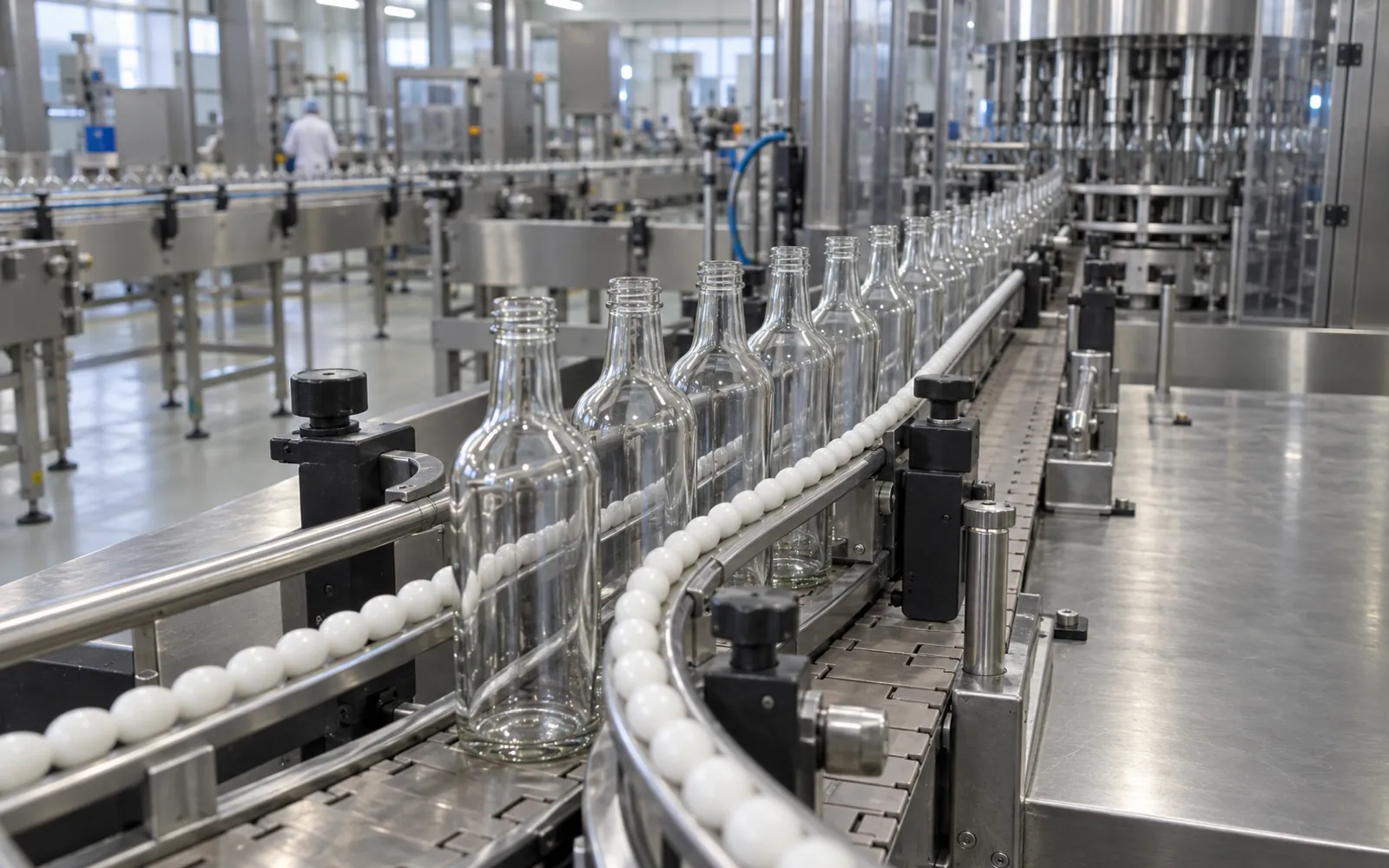
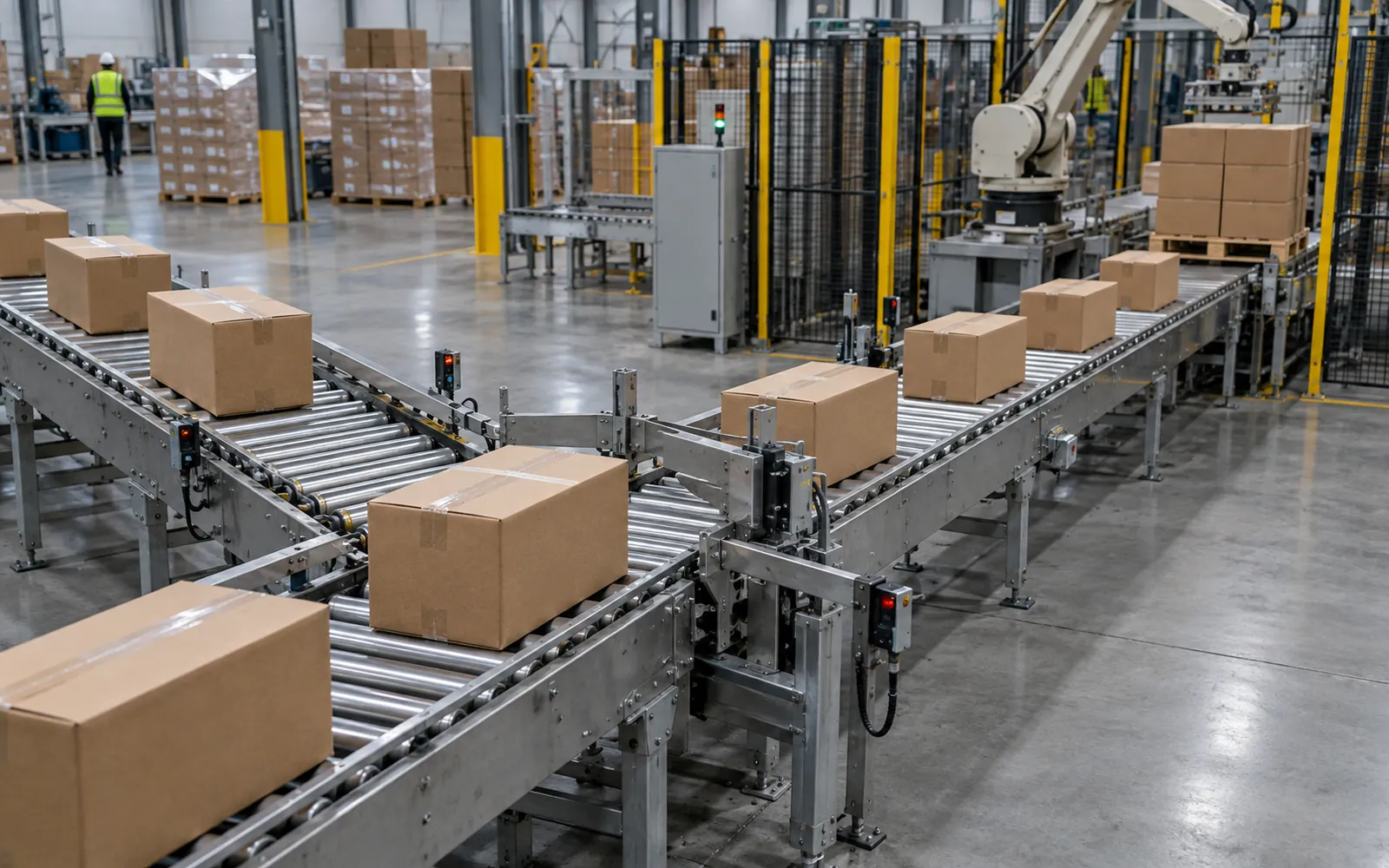
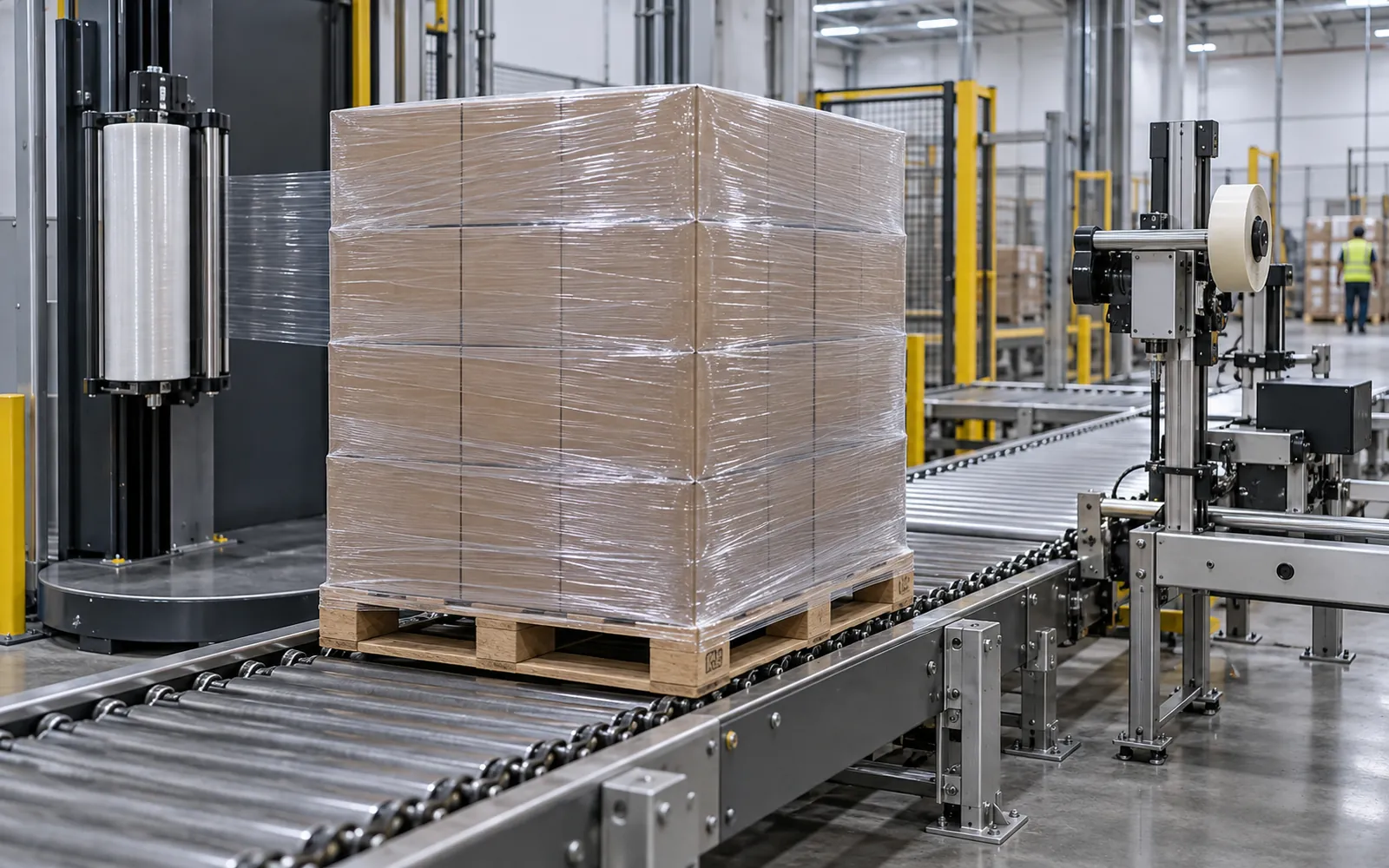
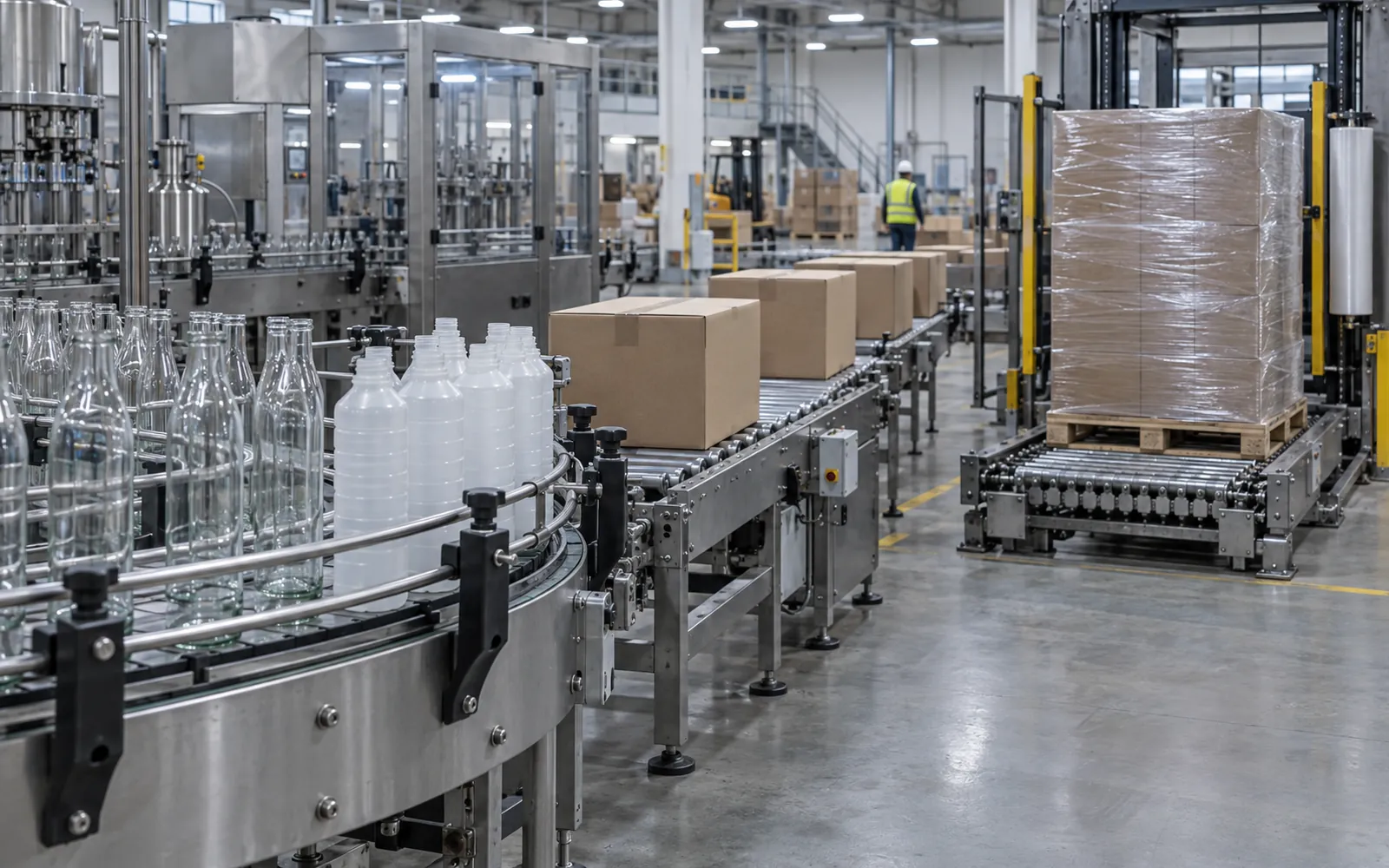
Packaging applications are organized by the thing being moved. A bottle, a shipping case, and a pallet each need different handling, and each passes through several machines on its way out of a plant. An equipment page can tell you how a case sealer works, but not why cases jam two stations later. The application guides follow one load from start to finish so that problems crossing machine boundaries show up in one place.
The three applications
Bottle handling follows a bottle from depalletizing through rinsing, filling, labeling, inspection, packing, and palletizing. It covers glass and plastic, back pressure, breakage, lightweight PET, changeover parts, and reject design.
Case handling follows a shipping case or carton from erecting through packing, sealing, coding, checkweighing, merging, diverting, and orientation to the palletizer infeed. It covers label-out requirements and the case quality problems that stop lines.
Pallet handling follows the pallet itself: empty dispensing, inspection, chain and roller conveying, slip and tier sheets, stretch wrapping, labeling, and transport to the warehouse by fork truck, conveyor, or automated vehicle.
How to use these pages
| If you start with | Read first | Then |
|---|---|---|
| A container that must be filled and packed | Bottle handling | Case handling, then pallet handling |
| A packed product that needs to reach a pallet | Case handling | Pallet handling |
| A load that is built but moves badly | Pallet handling | Palletizing equipment pages |
Each application page has the same structure: an overview of the flow, problems at each stage, equipment options with links, integration and controls, design considerations, and a hypothetical example configuration. The examples are not real projects and carry no performance claims.
What the guides have in common
Four themes recur across all three loads. Every machine runs at its own pace, so buffers, gaps, and spacing decide whether a line runs steadily or stops and starts. A bottle, case, or pallet that arrives facing the wrong way costs time at the next machine. The condition of the item, such as a thin plastic bottle, a bulging case, or a pallet with a protruding nail, often matters more than the machine’s rated speed. And inspection and reject paths need as much design as the machines they protect.
Safety applies to every stage. ASME B20.1-2024 is the United States safety standard for conveyors and related equipment, and OSHA’s 29 CFR 1910.212 covers machine guarding in general industry. Each application page notes where guarding and access matter most. For shipping labels, the GS1 Logistic Label Guideline gives placement rules that affect both case and pallet handling.
Related sections
Equipment pages cover the machines: palletizing, depalletizing, conveyors, and end-of-line packaging. Industry pages show how the same loads behave in beverage, bottled water, brewery, and food plants. For planning, the packaging line layout guide and the equipment map are the usual starting points.