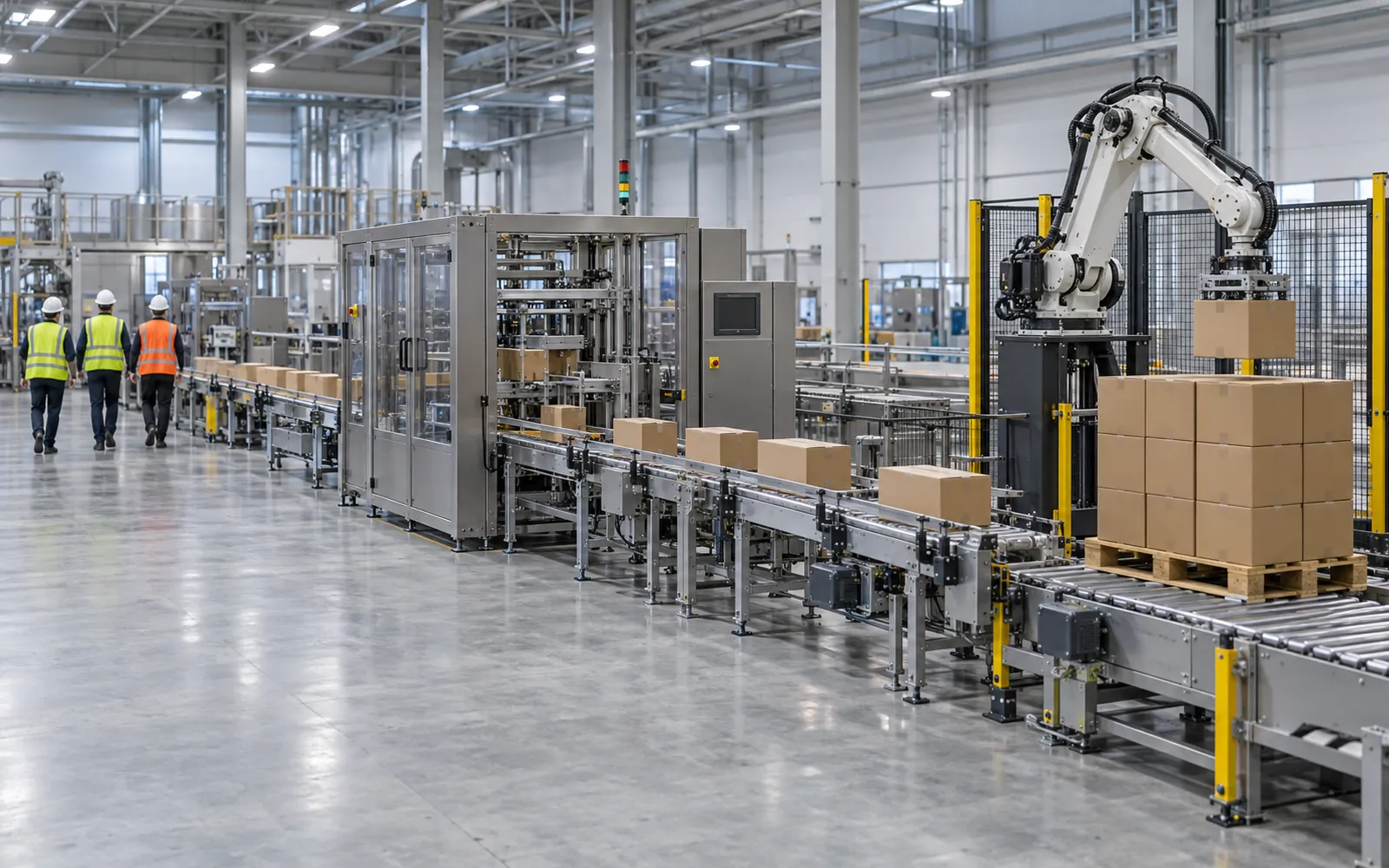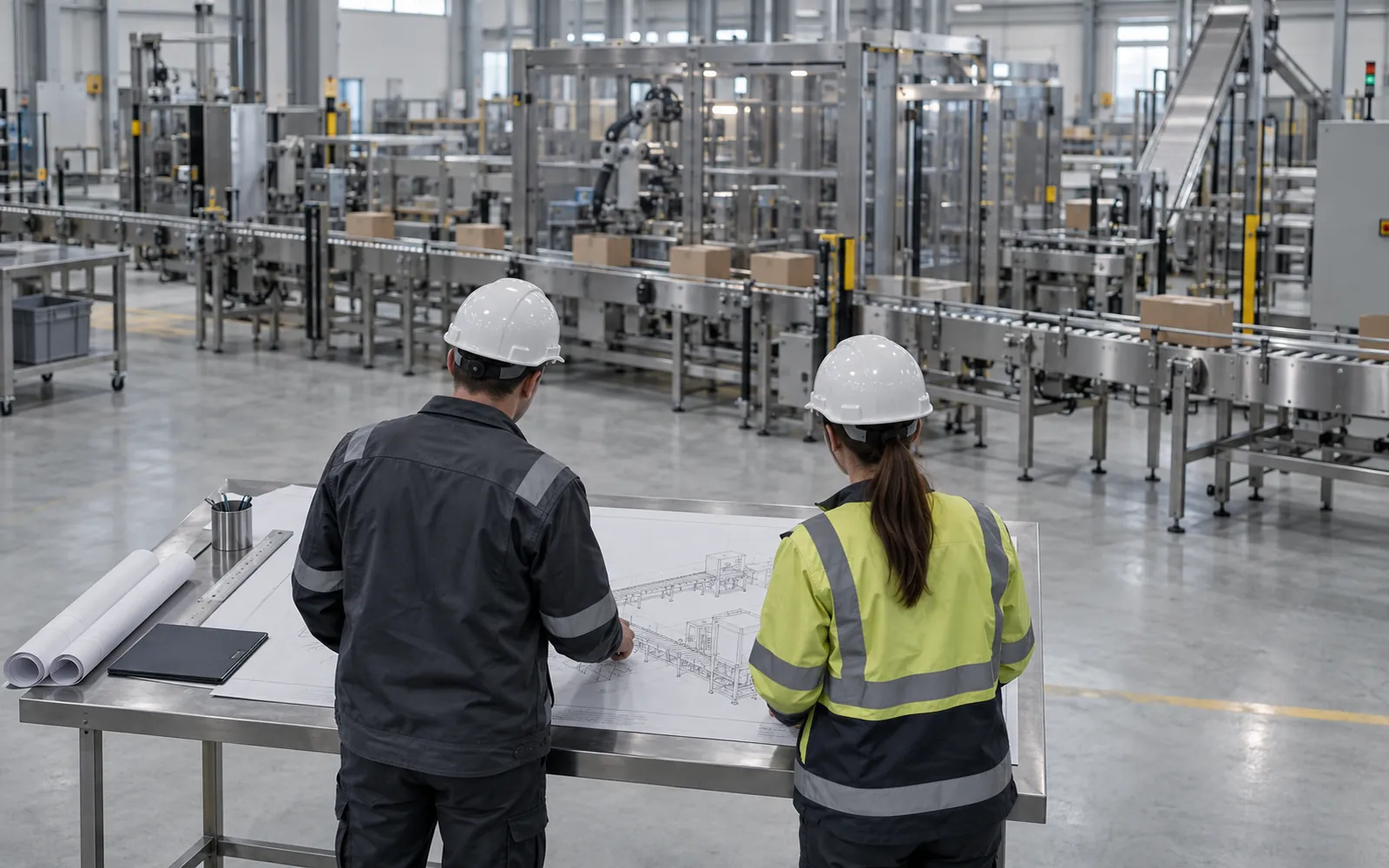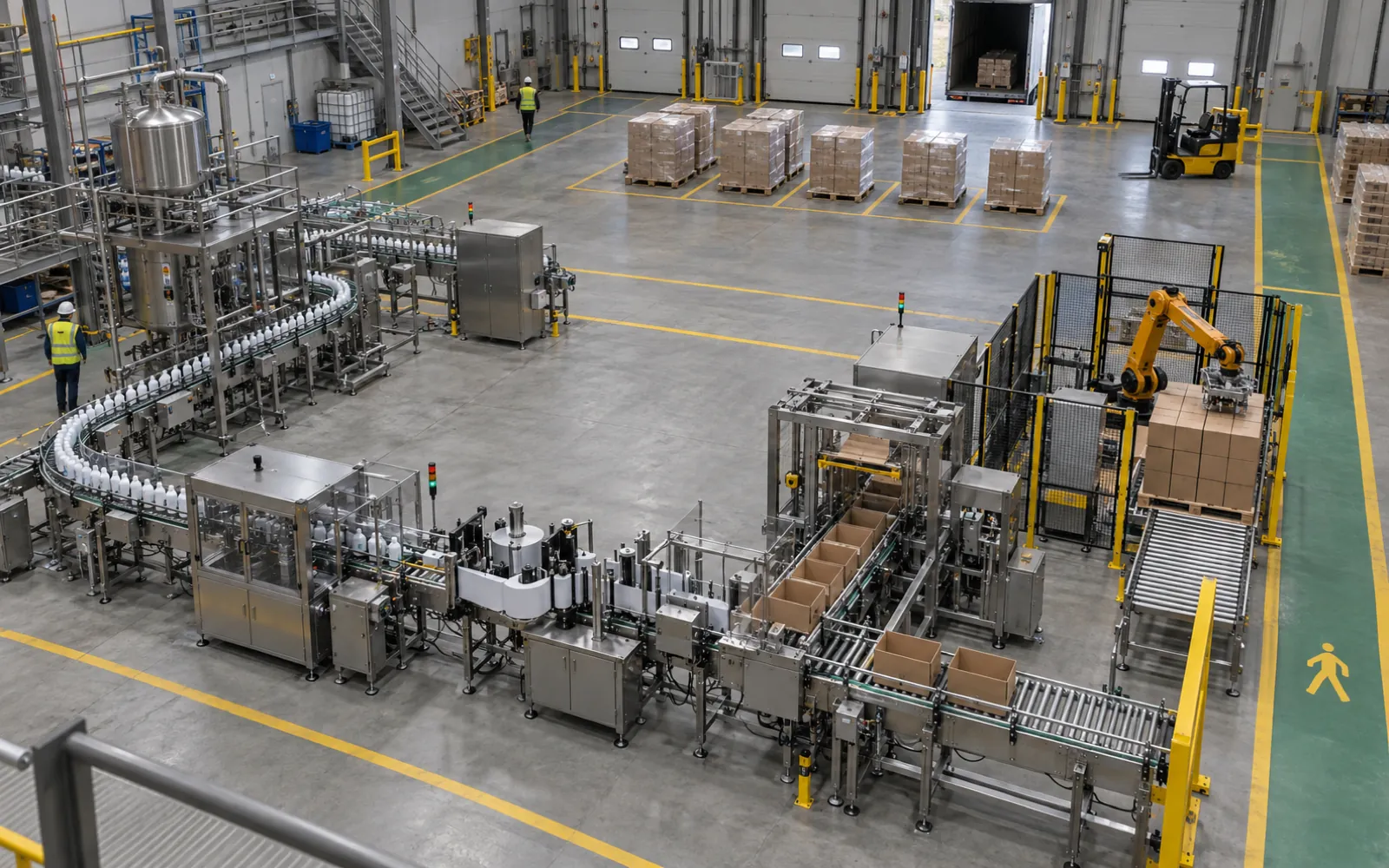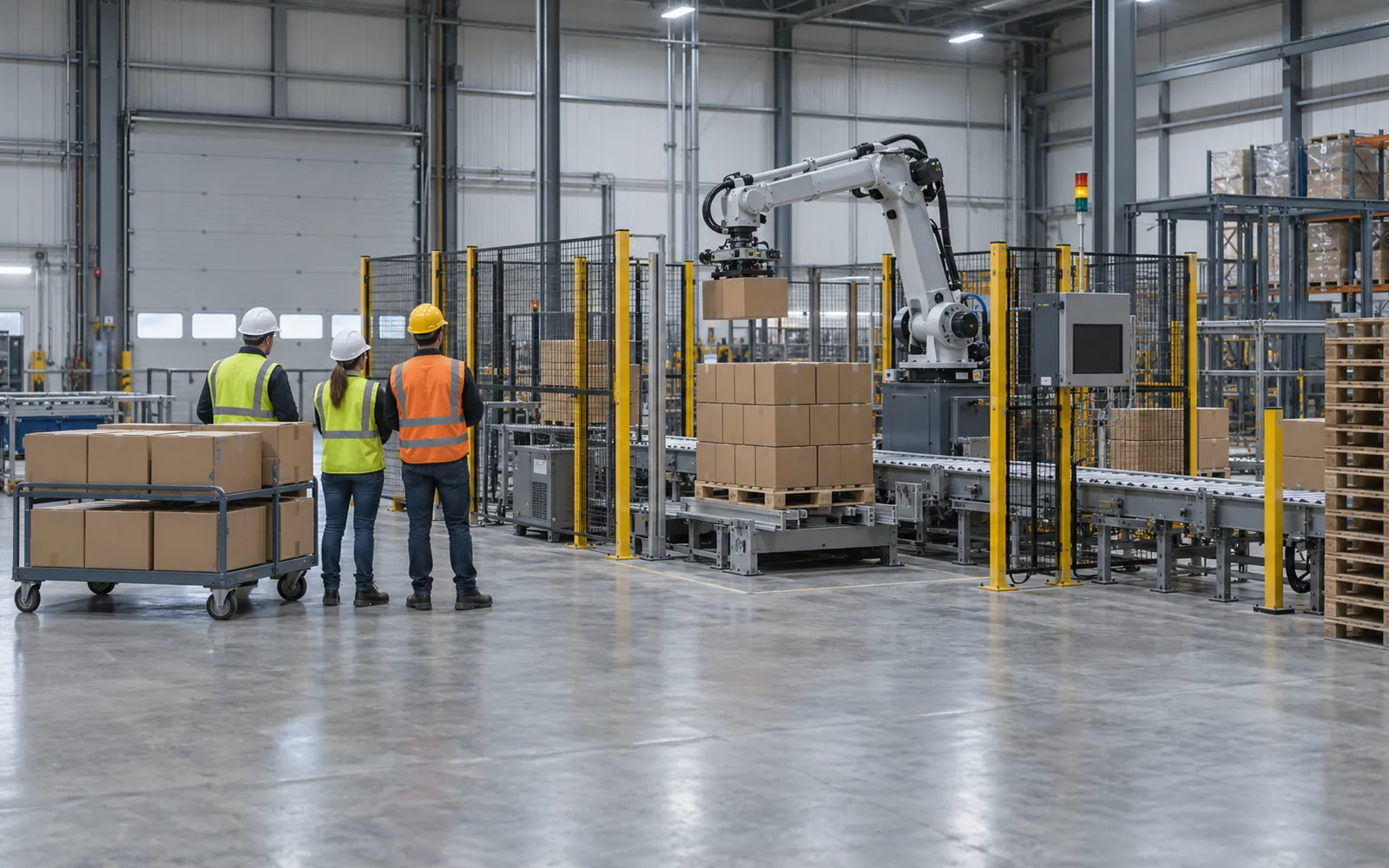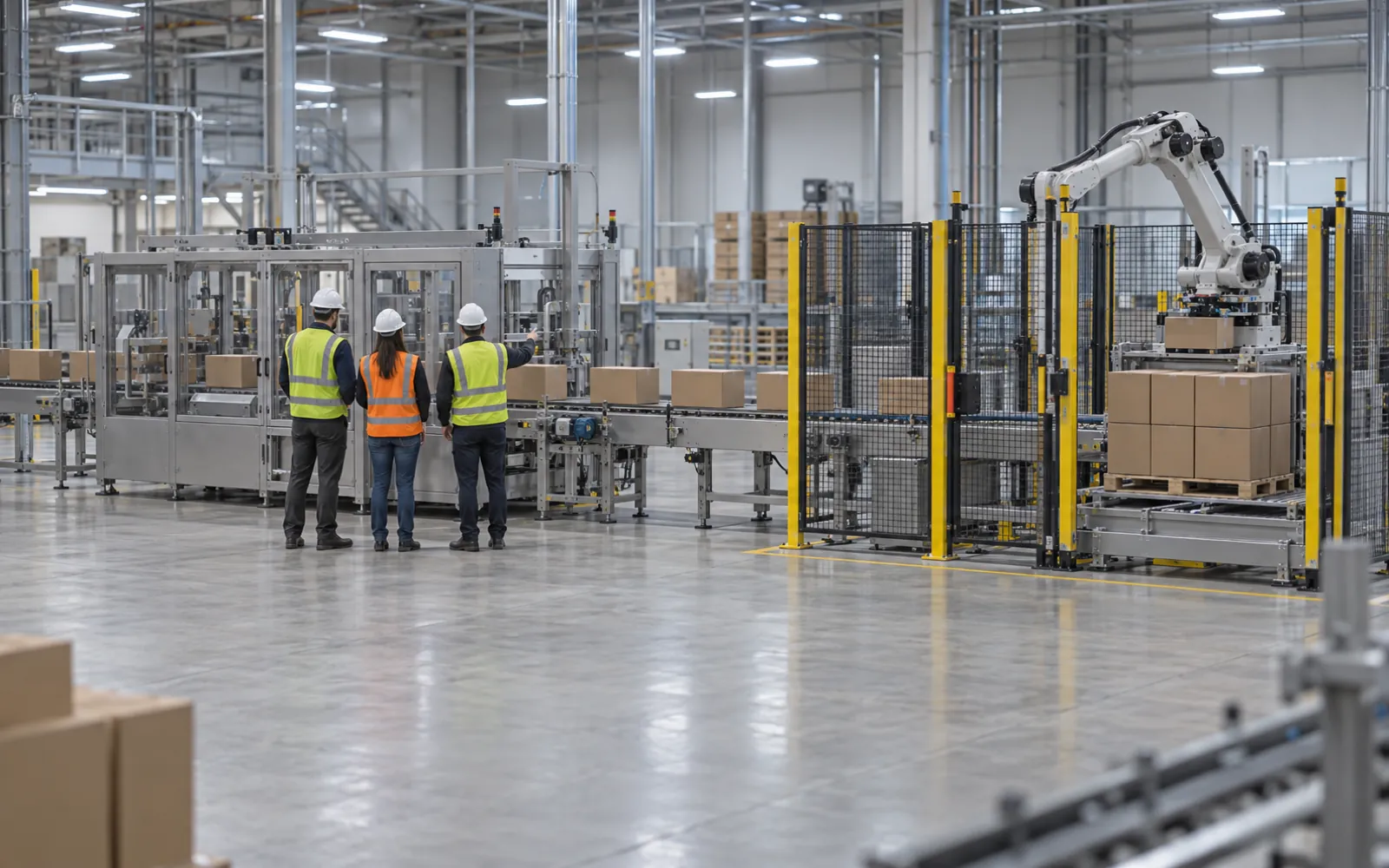
Unowned interfaces turn separate working machines into a line that jams or waits. Packaging line integration assigns mechanical, controls, safety and test responsibility across those boundaries. Choose the delivery arrangement by the work the plant can own, then record every interface.
| Arrangement | Responsibility to establish | Quote boundary to check |
|---|---|---|
| Plant-led multi-vendor | Plant names an owner for each transfer and combined testing | Equipment orders versus plant engineering work |
| Lead machine supplier | Named lead coordinates the stated interfaces | Its machine boundary versus other suppliers’ work |
| Independent integrator | Contracted mechanical, controls, safety and acceptance duties | Equipment resale, engineering fees and exclusions, as applicable |
| Complete / turnkey delivery | Named party accountable for the contracted line result | Installation, site work, testing and handover inclusions |
Contract models differ; none of these labels establishes how a supplier earns revenue. Use the turnkey scope guide, line design method and layout worksheet for the associated decisions.
What packaging line integration is, and who it is for
Most packaging machines are designed and tested alone. A case packer is rated on cases per minute at its own infeed. A palletizer is rated on its own cycle. Neither rating says what happens when product arrives in bursts from upstream, when a downstream machine stops for a film change, or when two machines disagree about who should wait for whom. Integration answers those questions before the line is in production, not during its first week.
Three groups care most. Plant and packaging engineers need to specify and accept a line. Operations managers need a line that runs without constant minor stops and without finger pointing. Procurement teams need a contract with no gaps in scope. A new line, a major expansion, and a retrofit that adds a machine to an existing line all raise the same questions, though the effort differs.
Integration is not the same as machine selection. You can choose excellent machines and still get a poor line if the interfaces are vague. The reverse also holds: a modest set of machines with clean handoffs, sensible buffers, and agreed controls often outperforms a more impressive set that was never designed to work together.
Who owns integration
Every line has an integrator, whether or not anyone uses the word. The question is who. There are four common arrangements.
- The plant’s own engineering team. The plant buys machines separately, writes the interface requirements, coordinates the schedule, and does the testing. This gives the most control and the most freedom to change suppliers, and it puts the most risk and work on the plant.
- A lead machine supplier. One supplier, often the one providing the central machine, coordinates the others. The scope can be narrow, such as only the conveyors around its own machine, or broad enough to resemble a turnkey project.
- An independent system integrator. This party may build little or no equipment. Its contract may cover line design, equipment selection or resale, controls and testing. Check which equipment it supplies, which engineering fees are separate, and which complete-delivery obligations it accepts; the title does not establish its income model.
- A turnkey supplier. One contract covers the equipment, interfaces, controls, installation, and acceptance. The turnkey packaging line page covers what that means in practice and where it fits poorly.
None of these is automatically better. What matters is that the owner of each interface is named in writing. To test this, pick any boundary on the line, such as the transfer between a case sealer and a palletizer infeed, and ask who is responsible if it jams, who is responsible if the signals do not match, and who pays to fix it. If the answer is unclear, the integration scope has a gap.
The integration scope
Integration scope divides into five areas, and a written scope should say who is responsible for each.
Mechanical handoffs
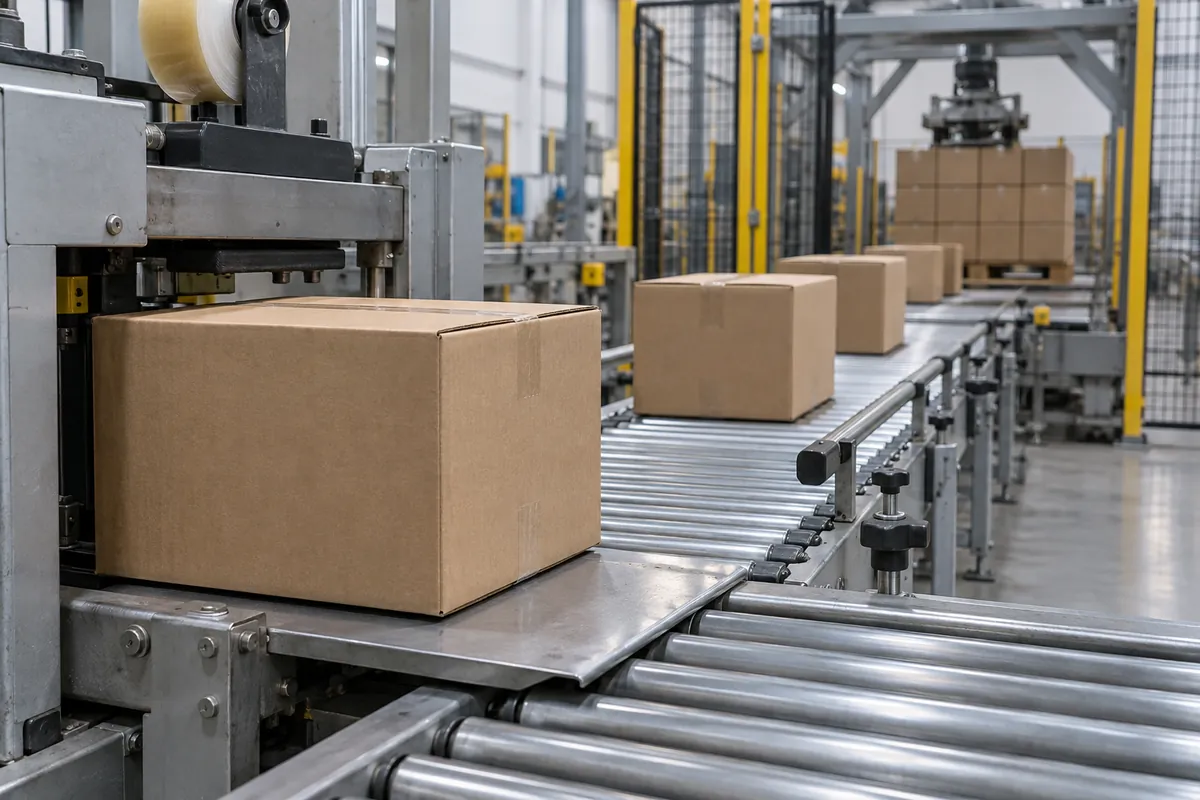
A mechanical handoff is any point where product leaves one machine and enters another: transfers between conveyors, the join between one machine’s discharge and the next machine’s infeed, and the guides, side rails, and transfer plates in between. The usual trouble spots are height, speed matching, product orientation, and gap control.
Handoffs differ by package. Upright bottles can tip at an unsupported transfer. Soft-sided cases can snag. Bags can slide. A handoff that works at low speed may fail at the line’s rated rate, which is why the bottle conveyors and case conveyors pages treat transfers as a design topic of their own. Between machines running at different speeds, buffers and accumulation conveyors absorb the difference and let product queue without damage.
Controls and communication
At the simplest level, controls integration is a set of start permissions, ready signals, fault signals, and accumulation sensors wired between machines. At a higher level it adds a line controller, a supervisory system, shared alarms, recipe or format change commands, and data collection for production reporting.
PackML provides a common machine-state vocabulary. OMAC’s public PackML page identifies its development and implementation resources; ISA’s public listing identifies ISA-TR88.00.02-2022. These pages were accessed October 8, 2026. This guide cites the 2022 edition and OMAC’s 2022 Implementation Guide, rather than claiming the latest edition. A common model does not settle transfer sequencing: define each signal, state mapping and recovery behavior for the project.
Controls scope should also list the physical network, the protocols each machine supports, who owns the line controller program, who may change it after handover, and how remote support works. Ownership of the source code is a contractual question, and it is easiest to settle before the project starts.
Copyable interface matrix
This is a proposed project record, not a PackML tag specification. Fill in the actual tag/address, signal owner and receiving machine for each row. Agree normal polarity, loss-of-communication behavior and any timeout in the approved controls design.
| Interface / field | Behavior to agree | FAT / SAT scenario | Responsible party to name | Acceptance evidence |
|---|---|---|---|---|
| Mechanical handoff | Height, gap, guide and supported orientation on the approved drawing | Smallest and least stable packs at sustained rate | Transfer designer + both machine suppliers | Drawing revision; test/video file; result |
| Ready | Downstream permission to receive product | Remove permission with product queued | Signal sender / receiver / integrator | Tag list; timestamped trace; result |
| Busy | Meaning of occupied or unavailable state and upstream response | Full station or buffer | Sender / line controls owner | State trace; queue observation |
| Fault | Fault propagation and agreed stop/hold behavior | Machine fault and communication loss | Machine supplier / integrator | Alarm log; affected-station record |
| Reset | Who requests/acknowledges process reset; no automatic motion or safety bypass | Fault cleared, then reset and separately authorized restart | Controls owner / plant approver | Sequence revision; witnessed test |
| Safety boundary | Approved interlock, stop and restart behavior across the boundary | Gate or protective device test under approved procedure | Safety designer / validator | Risk assessment reference; validation record |
For every interface, add: result ___; deviation ___; owner ___; closure date ___; evidence file ___. Link these records to the commissioning checklist.
Safety zones
Each machine arrives with its own guarding and safety system. Once the machines are joined, the safety design has to cover the whole line. Where does one safety zone end and the next begin? If an operator opens a gate on one machine, what must stop and what may keep running? When a conveyor passes through a guard fence, how is the opening protected? Emergency stops, light curtains, interlocked doors, and restart procedures all have to be consistent across the line, and whoever sets up lockout points must see one coherent picture.
The normal way to find these gaps is a single risk assessment of the finished line, rather than a collection of per-machine assessments. The page on automation in end-of-line packaging discusses guarding for robot cells and conveyor crossings in more detail.
Documentation
Documentation is where integration often disappoints. A line with ten suppliers can arrive with ten styles of electrical drawing, ten manual formats, and no document that describes the line as a whole. A good scope asks for a line-level package: an overall layout, one set of electrical and network drawings or an index tying them together, a signal list for every interface, a software description, spare parts lists, and a maintenance plan. It should also ask for as-built drawings, since drawings that match the design but not the installed machine are worse than none.
FAT and SAT
Acceptance testing turns scope into evidence. A factory acceptance test (FAT) happens at the supplier’s plant before shipment. A site acceptance test (SAT) happens in your building, with your utilities, your product, and your operators. Both should trace back to written requirements, use representative product, and have pass criteria agreed before the test, not argued during it. Open items need an owner and a route to closure. One practical guide splits the work into three groups: checks that can be proven before the equipment ships, checks that belong to installation, and checks that only the live production environment can confirm.
The commissioning and acceptance checklist lists the points a written FAT protocol should state, including run duration, target rate, product list, changeovers, fault recovery, and safety device checks.
Single-source or multi-vendor
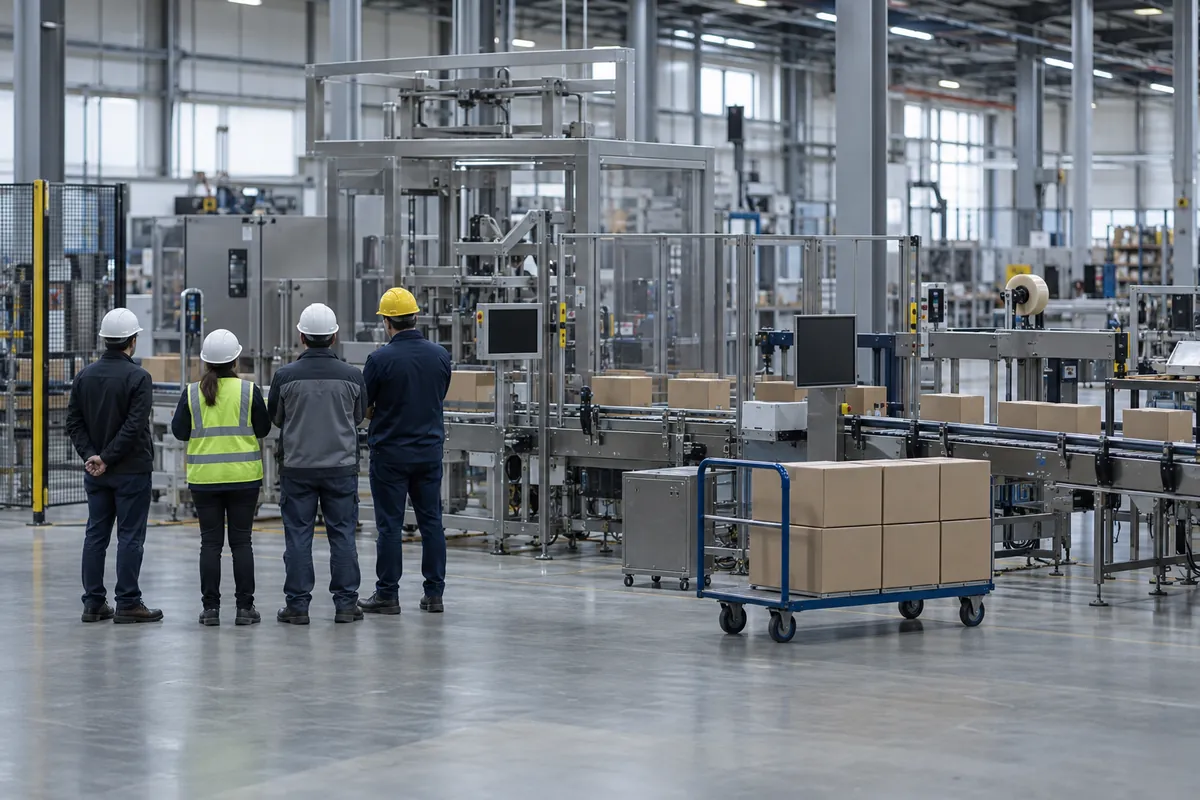
The central decision is how many parties should own parts of the line. Both approaches work, and they shift effort and risk in different ways.
| Factor | Single source | Multi-vendor |
|---|---|---|
| Interface accountability | One party answers for the combined line | The plant or an integrator must assign and enforce it |
| Machine choice | Limited to what the supplier offers or buys in | Best machine for each job |
| Engineering effort for the plant | Lower; mostly requirements and acceptance | Higher; interface specifications, scheduling, testing |
| Controls | One program and one documentation style | Several platforms that must be tied together |
| Flexibility to change later | Depends on the supplier’s openness | Easier to replace a single machine |
| Schedule risk | One schedule to manage | Dependencies across suppliers |
| Negotiating position | One large contract | More competition per machine, less bargaining power over the whole |
Single-source delivery suits plants that want to buy a result rather than a project, that lack spare controls engineering capacity, or that run a standard line type. It can be a poor fit when the line includes unusual machines one supplier cannot provide, when the plant has strong preferences on controls platform, or when the plant expects to keep changing the line.
Multi-vendor delivery suits plants with capable engineering teams, a clear picture of what they want from each machine, and a willingness to write interface specifications. It is more work, and it only holds together when someone owns the whole.
Hybrids are common. A plant may buy the filling and capping machines from the process equipment suppliers it trusts, and give one supplier the whole end-of-line section, from case packing through palletizing. The line is then two integrated blocks joined at one clearly defined interface.
How integration connects to design and layout
Integration scope is set after the line has been designed, and the design depends on integration choices. The line design page covers the engineering sequence: requirements, rates, machine selection, buffers, changeovers, and utilities. The layout page covers where machines sit in the building, and the packaging line layout guide gives a decision-oriented summary. Integration runs across all three, because it defines the interfaces those decisions create.
One concept links design to integration: the machine with the lowest capacity sets the pace of the line. Machines before it need spare capacity to refill the buffer after a stop, and machines after it need spare capacity to clear product that has piled up. This speed profile is often called the V-curve. It is a starting point, not a complete method, and the line design page covers its limits.
Decision factors
Six questions shape the approach for a specific project.
How many suppliers will be involved? The more parties, the more the interface list matters, and the more a single point of accountability is worth. How much controls engineering can the plant provide? A plant with a strong controls team can take on more of the work.
Is it a new line or a retrofit? Retrofits must work around existing machines, controls, and floor space, which often favors a scope the plant controls closely. What happens after handover? A plant that will modify the line often needs the program source and drawings.
How sensitive is the product? Food, beverage, and pharmaceutical lines add sanitation and validation requirements that affect what documentation the line needs. And what does downtime cost? A line that feeds a shipping deadline justifies more rigorous acceptance testing.
Where to go next
For a complete line from one supplier, read the turnkey packaging line page. For the engineering side, read packaging line design. For equipment at the end of the line, see end-of-line packaging, case packers, and robotic palletizers. The beverage packaging and food packaging pages show how the same integration questions play out in each sector. To weigh equipment cost, see the palletizer cost guide and the conveyor cost guide.
Common mistakes
- Buying machines before defining interfaces. The signal list and transfer heights should exist before purchase orders do.
- Treating each machine’s rated speed as the line speed. The slowest machine sets the line rate, along with how well buffers and stops are managed.
- No owner for the combined safety assessment. Each supplier certifies its own machine, and nobody examines the gaps between them.
- Accepting machines individually and the line never. Individual FATs are useful, but only a combined test shows how the line behaves.
- Leaving documentation to the end. Drawings and manuals are cheapest to get right when they are requested in the purchase contract.
- Ignoring people. Operators and maintenance staff need training on the line as a system, not just on each machine.