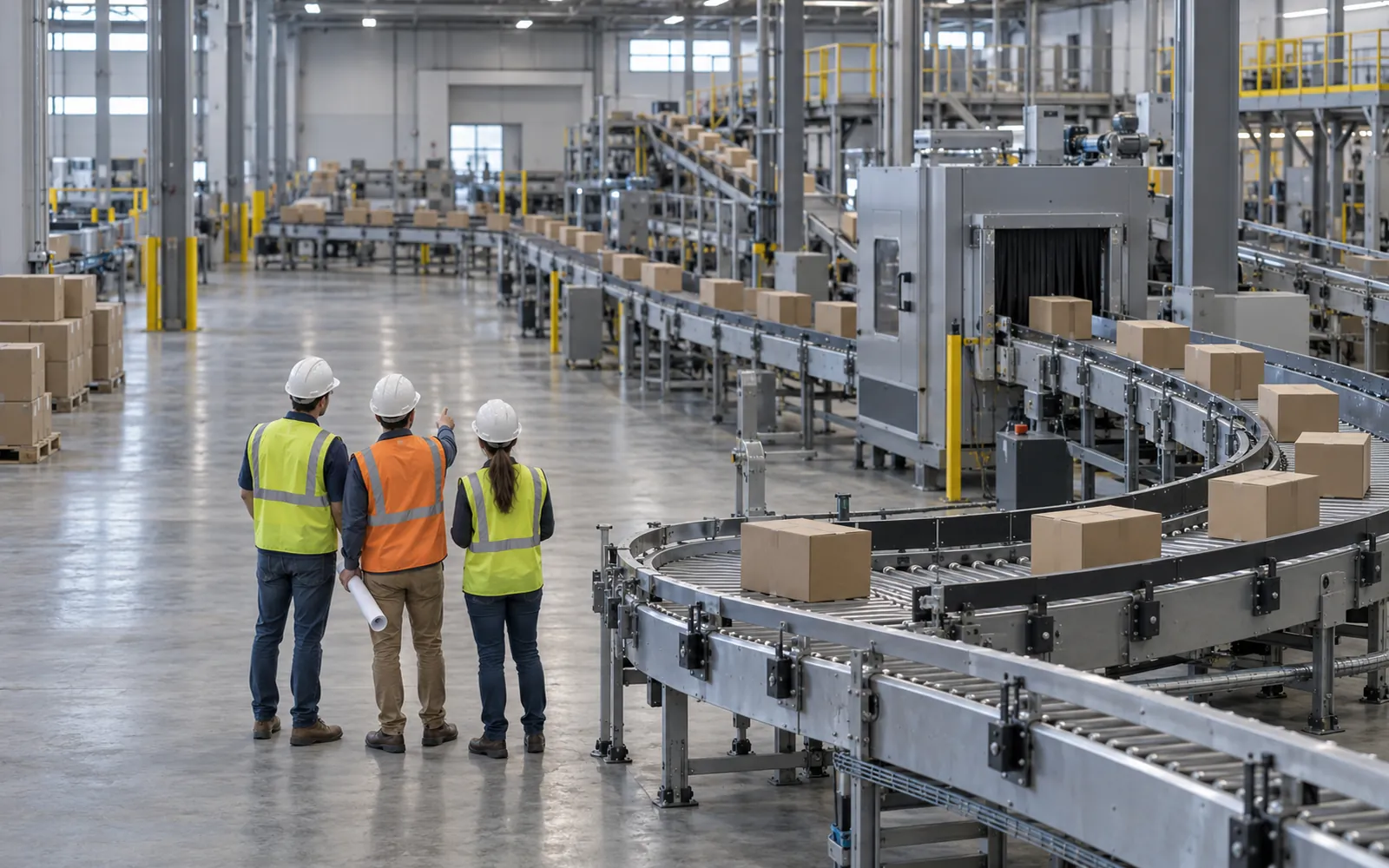
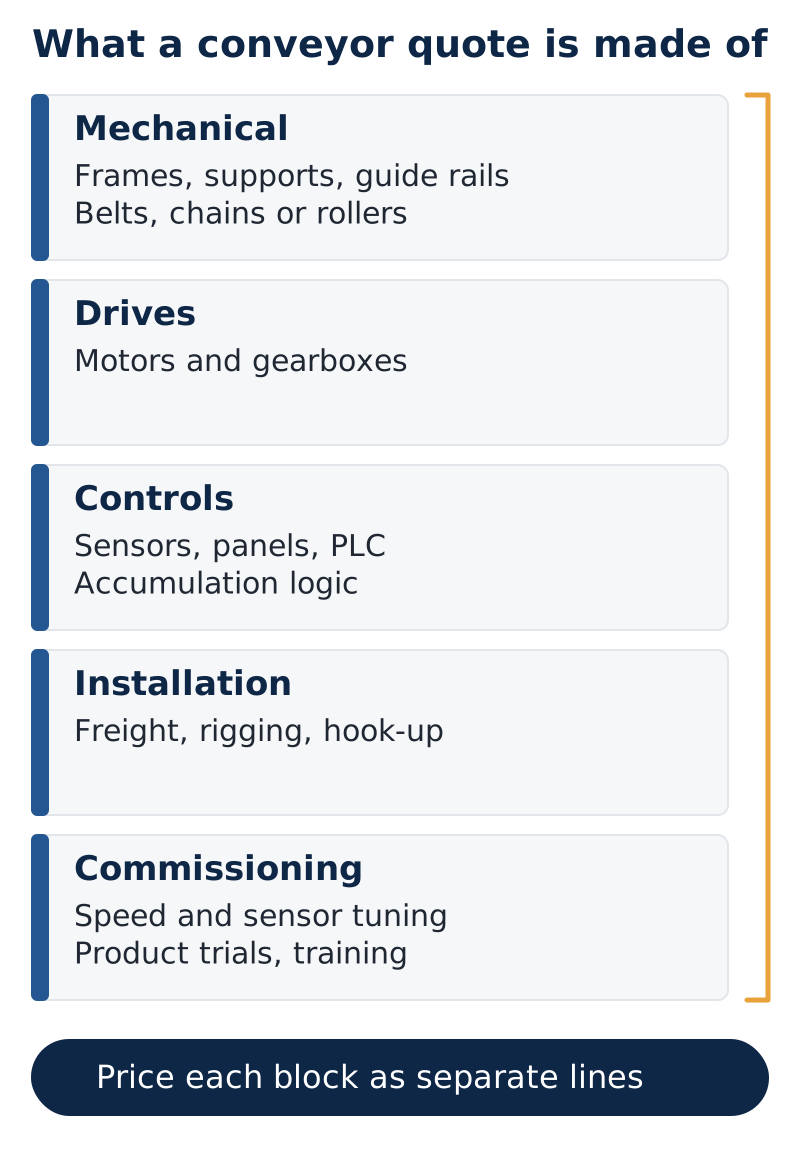
A conveyor-only price can leave controls, installation, and start-up outside the budget. Build the project total as equipment + controls + installation + commissioning + a defined contingency, counting each item once.
| Budget term | Include / define | Scope record |
|---|---|---|
| Equipment | Frames, transport surfaces, drives, transfers, guarding | Quantities, layout, construction: ___ |
| Controls | Sensors, panels, wiring, accumulation and shared logic | Included locally or shared once: ___ |
| Installation | Delivery, rigging, anchoring, utilities and site work as quoted | Inclusions, exclusions, owner: ___ |
| Commissioning | Product trials, acceptance, training and documentation | Days, test scope, owner: ___ |
| Defined contingency | Reserve for named unresolved scope or risks | Amount or basis, covered risks, approval: ___ |
This guide gives a budgeting method and explicitly hypothetical examples, not market prices. Jump to the worked example, then use the cost record below to compare matching scopes.
Not a quote
Define the scope before calculating: conveyor family, length and width, load, speed, controls, construction, and site work. Compare quotes against the same layout and list open exclusions separately. The packaging conveyor overview helps choose the transport family.
What drives conveyor cost
Decide each of these before you request quotes.
Conveyor type comes first. Belt, roller, tabletop chain, modular belt, and vertical conveyors are built differently and price differently, and a supplier guide notes that installation cost varies with the type being installed. Length and width matter next: longer and wider conveyors use more material and need more supports, and the same guide says they take more installation time. Heavier loads and faster speeds need stronger frames, bigger drives, and heavier-duty bearings.
Surface and controls are the next layer. Belt materials differ by cost, durability, and suitability for the product. A supplier guide lists PVC, rubber, and steel as common belt materials, with premium materials generally leading to higher cost. Variable speed, photoeyes, and automated control add cost, as the same guide notes for features such as automated controls and integrated sensors.
Layout and site finish the list. Inclines, declines, spirals, and vertical lifts add structure and drives. Curves, merges, diverters, and transfers add parts and engineering. Dry, wet, cold, dusty, or sanitary areas need different materials and ratings. Site access, floor condition, and the production schedule affect installation labor.
Cost drivers by conveyor type
The same drivers weigh differently on each conveyor family. The packaging conveyor systems overview describes each type in more detail.
| Conveyor type | Typical use | Main cost drivers |
|---|---|---|
| Belt conveyor | General transport of cases, trays, and bags | Belt material, width, length, drive size, and tracking features |
| Live roller and motorized roller | Cases, totes, and pallets with controlled accumulation | Roller count and spacing, zone controls, and drive method |
| Tabletop chain | Bottles, cans, and containers in lanes | Chain material, plate width, lane guides, and number of curves |
| Modular plastic belt | Washdown, curves, and food areas | Belt series and material, sprockets, frame material, and cleaning access |
| Accumulation conveyor | Buffering between machines | Length, zone count, sensors, and control logic |
| Vertical conveyor or spiral | Changing elevation | Lift height, structure, drive, and safeguarding of the opening |
| Air conveyor | Empty plastic bottles | Blower and plenum, guide rails, and tooling for each neck size |
For case transport, see case conveyors. For container lanes, see bottle conveyors. For changing floor level, see vertical conveyors.
Controls and accumulation
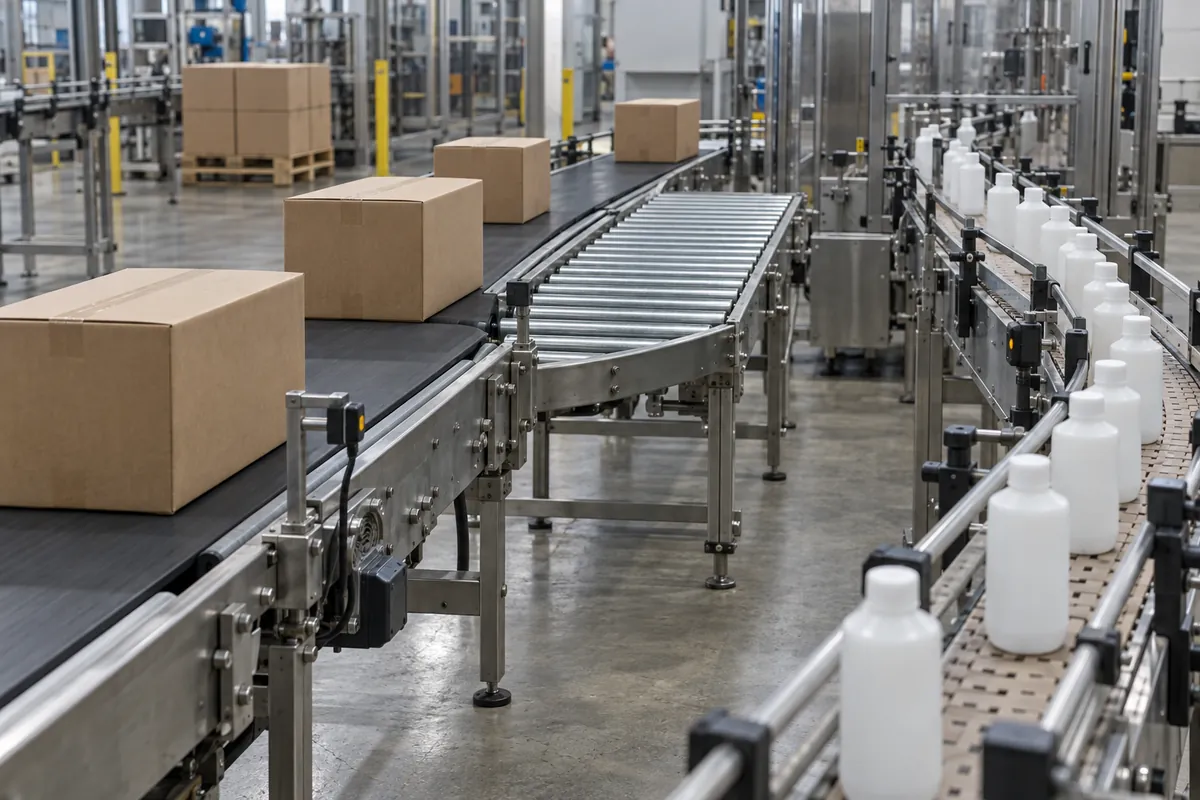
Controls turn a set of conveyors into a system. A basic arrangement uses a start and stop circuit and a few photoeyes. A more capable one adds variable-speed drives, zone control, merge and diverter logic, and communication with upstream and downstream machines. Each step adds sensors, wiring, programmable logic, and commissioning time.
Accumulation deserves its own line in the budget. A buffer that holds product while a downstream machine recovers needs length, zone sensing, and gentle handling, especially for containers that must not touch under pressure. The accumulation conveyors page explains the methods. When you compare quotes, check how many minutes of buffer each supplier provides at the line rate and what logic releases product afterward. A conveyor with no accumulation may cost less but can shift the cost to the machines it feeds, because short stops then ripple through the line.
Sanitary and washdown construction
Hygienic construction raises cost, and it can be worth it. A supplier article on hygienic conveyor design describes smooth, crevice-free surfaces, stainless steel grades such as 304 and 316 or approved polymers, open architecture that allows full access for cleaning, sealed or gasketed panels where needed, and features such as tool-less disassembly and drainage. Each adds material, fabrication, or engineering. The same article points to hygienic standards such as those from the European Hygienic Engineering and Design Group and 3-A Sanitary Standards.
Ask each supplier which hygiene guidelines the design follows, what the frame and fasteners are made of, how the belt is removed for cleaning, and what ingress ratings apply to motors and sensors. Compare the answers with your plant’s cleaning method, whether dry cleaning, low-moisture, or full washdown. Over-specifying adds cost, and under-specifying can create cleaning time and contamination risk later.
Installation, safety, and commissioning
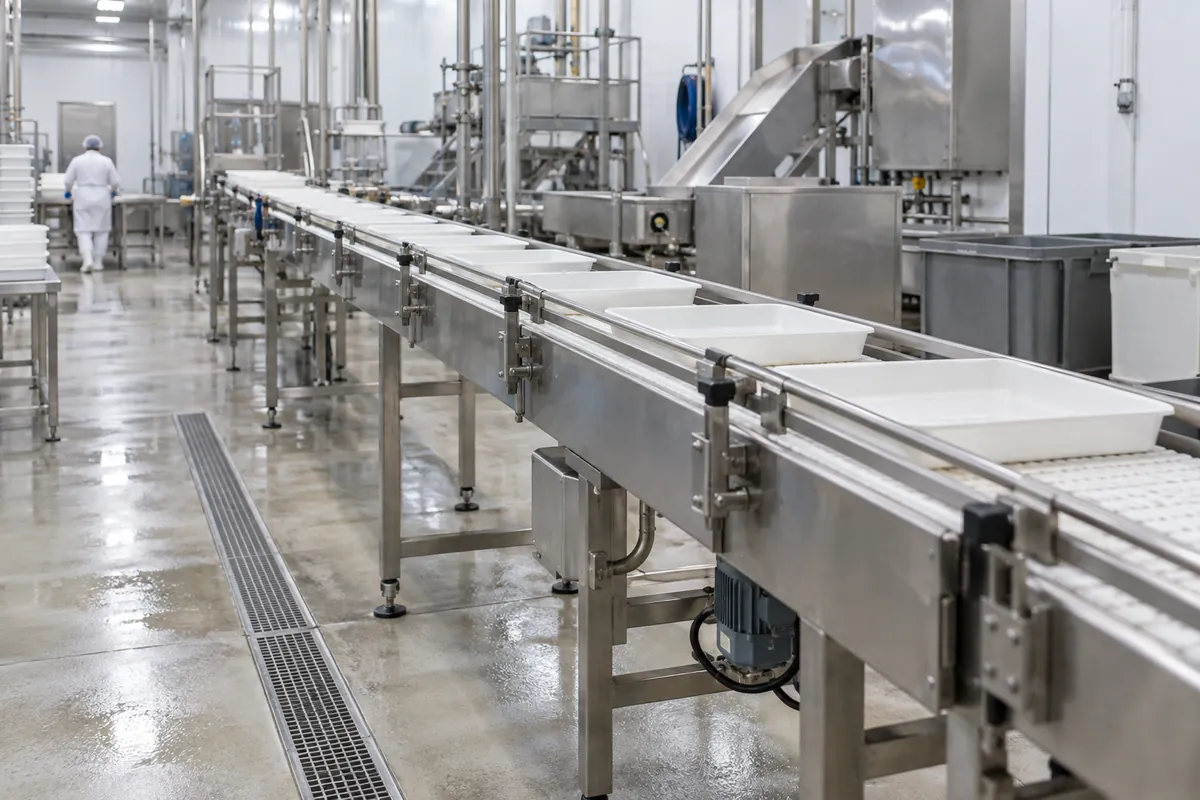
Horizon Industrial’s project-planning guide, section “Cost of Installing a Conveyor System” (accessed October 8, 2026), names conveyor type, length, complexity, and location as installation cost drivers. These are the installer’s published considerations, not a project estimate. Add the condition of the floor, access for equipment, the distance to power, and the time window the plant can give.
Safety is part of the scope. Conveyors have pinch points, drives, transfers, and areas where people may reach in. ASME’s official B20.1 product page lists B20.1-2024, Safety Standard for Conveyors and Related Equipment, and describes scope from design and installation through maintenance, inspection, and operation (accessed October 8, 2026). This verifies the public edition/scope listing, not the paid standard’s full clauses or compliance of a proposed installation. Ask each supplier which edition and which guarding they apply, what emergency stops and warning devices are included, and who is responsible for lockout provisions. The wider machine safeguards also matter at transfers to palletizers and other equipment.
Commissioning covers adjusting speeds and sensors, checking transfers with real product, and training staff. Quotes should state how many days of start-up support are included and what happens if the line needs more.
Cost components checklist
Copy this record for each quote. Header: currency ___; quote date ___; validity ___; tax included/excluded ___; freight included/excluded ___. Repeat a tax/freight note on a line when it differs from the header.
| Cost item | Qty / unit | Included / excluded; tax / freight exception | Supplier / interface owner | One-time / recurring | Amount / evidence |
|---|---|---|---|---|---|
| Frames, surfaces, drives, supports | ___ | ___ | ___ | One-time | ___ |
| Curves, merges, transfers, elevation | ___ | ___ | ___ | One-time | ___ |
| Controls, sensors, accumulation logic | ___ | ___ | ___ | One-time / license if any | ___ |
| Guarding and safety devices | ___ | ___ | ___ | One-time | ___ |
| Freight / delivery | ___ | ___ | ___ | One-time | ___ |
| Installation, rigging, utilities/site work | ___ | ___ | ___ | One-time | ___ |
| Commissioning, trials, training, spares | ___ | ___ | ___ | One-time | ___ |
| Defined contingency: named risks/basis | ___ | ___ | ___ | Reserve | ___ |
| Energy, maintenance, ongoing support | ___ | ___ | ___ | Recurring; keep outside initial total | ___ |
Count each cost once. If drives or controls are in an equipment line, mark the separate line “included,” not another amount. Put a shared control panel in one system line, and identify excluded work and its owner before comparing totals.
Takeaway: Match currency, date, quantities, tax/freight basis, and responsibility before treating a lower total as a saving.
What a belt conveyor price includes
A belt conveyor price can mean very different things. A catalog price for a standard belt conveyor usually covers a section of frame, belt, rollers or slider bed, and a drive, delivered as a unit. A packaging line belt conveyor quote usually adds side guides, transfers to the neighboring machines, sensors, a control panel or drive cabinet, guarding, installation, and start-up. Before comparing a belt conveyor price with a quote, check which of these the price covers.
The variables that move a belt conveyor price are the same ones that move any conveyor price, applied to a belt:
- Length and width. More frame, belt, and supports, and more installation time.
- Belt material and surface. A supplier guide lists PVC, rubber, and steel as common belt materials, with premium materials generally costing more. Food-contact and washdown belts add to that.
- Load and speed. Heavier products and faster belts need a stronger frame, a larger drive, and heavier-duty bearings.
- Drive arrangement. End drive or center drive, fixed or variable speed, and the motor and gearbox rating.
- Path. Inclines, declines, curves, and transfers each add structure and engineering.
- Environment. Painted steel, stainless steel, or a sanitary design for the cleaning method of the room.
- Controls. A simple start and stop, or sensors, zones, and communication with the machines on either side.
A bulk-material belt conveyor, the kind used for aggregates or grain, is built to different loads and standards, so its price data does not transfer to a packaging line. Use prices for packaging conveyors only.
Cost per foot: useful as a check, misleading as a budget
Cost per foot is a natural question, and it is a poor way to set a budget. Some costs scale with length: frame, belt or chain, supports, and guide rails. Others are fixed per conveyor or per system: drives, control panels, sensors at each transfer, merges and curves, and commissioning. A short conveyor carries the fixed costs over few feet, so its cost per foot looks high. A long straight run spreads them out, so its cost per foot looks low. Neither figure transfers to a different layout.
Cost per foot is useful after itemized quotes arrive. Split each quote into two parts:
- Length-driven cost, which is the frame, belt or chain, supports, and rails, divided by the conveyor length.
- Fixed cost, which is everything else: drives, controls, transfers, curves, guarding, installation, and commissioning.
Comparing length-driven cost per foot across suppliers shows whose basic conveyor is priced differently. Comparing fixed cost shows who has included more controls, transfers, or services. A large gap in either part is a question to ask the supplier, not a reason to choose the cheaper quote.
A conveyor cost calculator you can build
No online calculator knows your layout, so the useful version is a worksheet built from your own quotes. It has the same structure for every conveyor run:
Run cost = (length-driven cost per foot × length) + drives + transfers and curves + controls + accumulation + guarding + installation + commissioning
Then: Project budget = sum of all runs + shared controls + freight + training and spares + defined contingency, with each item added only when not already included. Show applicable tax separately if excluded from line amounts; recurring ownership costs use their own time horizon.
How to fill it in:
- Take the length-driven cost per foot from an itemized quote for a similar conveyor type and construction, as described above. Do not borrow it from a different conveyor family or from a bulk-handling quote.
- Count drives, transfers, curves, merges, and diverters from the layout drawing, and price each from the quotes.
- Add the controls level the run needs: basic start and stop, zoned accumulation, or full communication with the machines.
- Show any stainless or sanitary construction premium as a separate line only if it is not already included in the quoted conveyor items. Count each cost once, including controls shared across runs.
- Add installation and commissioning as the suppliers quoted them, and keep exclusions such as electrical supply and floor work on their own lines.
The worksheet makes changed requirements and exclusions visible. The worked example below uses the same itemized approach.
Worked example
Illustrative example, not market pricing. The numbers are round and hypothetical. They show how a conveyor budget is assembled and how one decision changes it.
A plant plans a case conveyor run from a case sealer to a palletizing area. Assume the following scope amounts in arbitrary currency units, with no tax or freight adjustment and no contingency yet assigned; this is a scope subtotal.
| Line | Amount |
|---|---|
| Frames, supports, and guide rails | 20,000 |
| Belts and rollers | 15,000 |
| Drives and motors | 12,000 |
| Sensors and controls | 18,000 |
| Guarding and emergency stops | 8,000 |
| Installation and rigging | 14,000 |
| Commissioning, training, and spares | 8,000 |
| Scope subtotal before defined contingency | 95,000 |
Now suppose the plant adds a short accumulation section and a wash-rated frame because the run enters a sanitary room. Illustratively, accumulation zones and sensors add 10,000, and the stainless frame and sealed components add 25,000. The scope subtotal rises to 130,000, about 37 percent more than the base case; a final project budget would also state any tax, freight, and defined contingency not already counted. The gain is not output. It is a buffer that keeps the palletizer fed during short stops, and a design that can be cleaned the way the room requires.
The lesson is method, not magnitude. Trace each added requirement to a line in the budget, and justify each line with a requirement. For a payback model on the palletizing side, see the palletizer cost guide. Its ROI formula can be adapted for conveyors by counting labor saved, damage reduction, and avoided downtime.
How to request comparable quotes
- Write the specification: products and packages, weights, line speed, conveyor length, path, elevation changes, and environment.
- Draw the layout. A simple plan with start and end points, transfers, and obstacles removes many assumptions.
- State the buffer, as the number of minutes of accumulation needed at line rate.
- List the controls, including what the system must communicate with upstream and downstream.
- Define the construction standard: cleaning method, materials, and ratings.
- Ask for itemized pricing using the checklist above, with freight, installation, commissioning, and training as separate lines.
- Ask what is excluded. Electrical supply, floor work, and permits are often outside a conveyor quote.
- Request references for the same product type, and ask what changed after start-up.
The commissioning and acceptance checklist lists documents to request, and the palletizer selection guide shows how to compare complete cells that include the conveyor interface.
Related equipment and guides
Read the equipment pages for the conveyor type you are considering: case conveyors, bottle conveyors, accumulation conveyors, and vertical conveyors. The palletizer cost guide covers the cost of the machine at the other end of the line.
Conveyor choices are tied to the floor plan, so see packaging line integration layout for how conveyors, lifts, and buffers fit a building.