| Product / shipping format | Case-loading route | Closure | Palletizer interface |
|---|---|---|---|
| Rigid containers in pre-erected RSC cases | Drop or controlled placement; test product damage | Top tape or hot melt; bottom closed upstream | Closed case, agreed orientation and spacing |
| Fragile or flexible packs in cases | Pick-and-place; prove tooling and case supply | Closure matched to the case style | Verified count, stable case, agreed rate |
| Cartons or flow-wrapped groups | Side/end load if lateral contact is acceptable | Defined flap closure after loading | Agreed leading face and case dimensions |
| Uniform group in a wraparound case | Form blank around the group; separate erector may be unnecessary | Integrated adhesive closure, model dependent | Verify discharge orientation and package rigidity |
| Tray or shrink bundle | Dedicated tray/bundle route | Specify film or tray closure separately | Prove bundle handling and pallet pattern |
These are candidate routes to validate with production packs. See the equipment overview and packaging line integration for scope and handoff checks.
| Scope | Define for the chosen route |
|---|---|
| Required functions | Group and load products, supply/form the chosen shipping pack, close or secure it, transfer and build the specified pallet load |
| Optional or separately supplied stations | Labeling, checkweighing, detection, reject handling, sheet/partition insertion, and wrapping: include when the project requires them |
A separate erector and sealer belong to the pre-erected-case route; do not add them automatically to a wraparound or tray route.
What end-of-line packaging includes
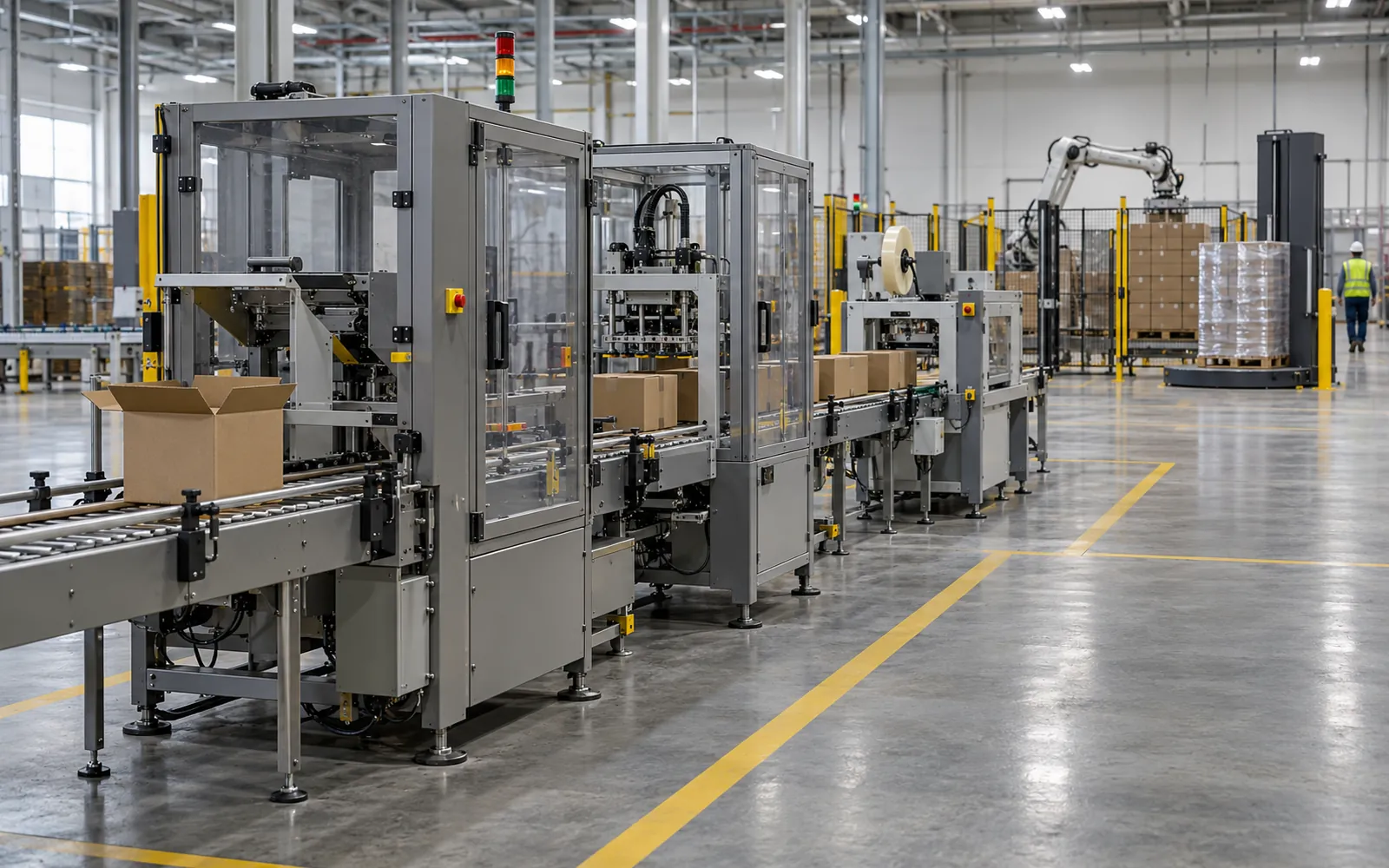
The phrase covers everything downstream of primary packaging. Primary packaging puts product into its container, whether a bottle, pouch, can, carton, or tray. End-of-line packaging, often shortened to EOL, begins when those containers leave the filler, capper, labeler, or flow wrapper and ends when a pallet is ready to leave the building. One equipment supplier describes the usual scope as collation, case packing, case sealing, labeling, checkweighing, pallet wrapping, and palletizing, with the exact mix set by the product and the format leaving the primary line.
That scope is the reason end-of-line packaging systems are rarely a single-machine decision. Each machine receives what the previous one delivers, so the speed, orientation, and spacing a machine needs must match what the machine before it can provide. A plant that buys the fastest case packer available still waits on a slow case supply, a hand-built pallet, or a sealer that cannot keep up. For a view of how this section fits with the rest of the line, see the equipment overview and the packaging line integration section.
The question of what to automate and in what order has its own page on end of line packaging automation.
Machine groups in an end-of-line system
Equipment falls into six groups, and most plants use only some of them.
Case erecting
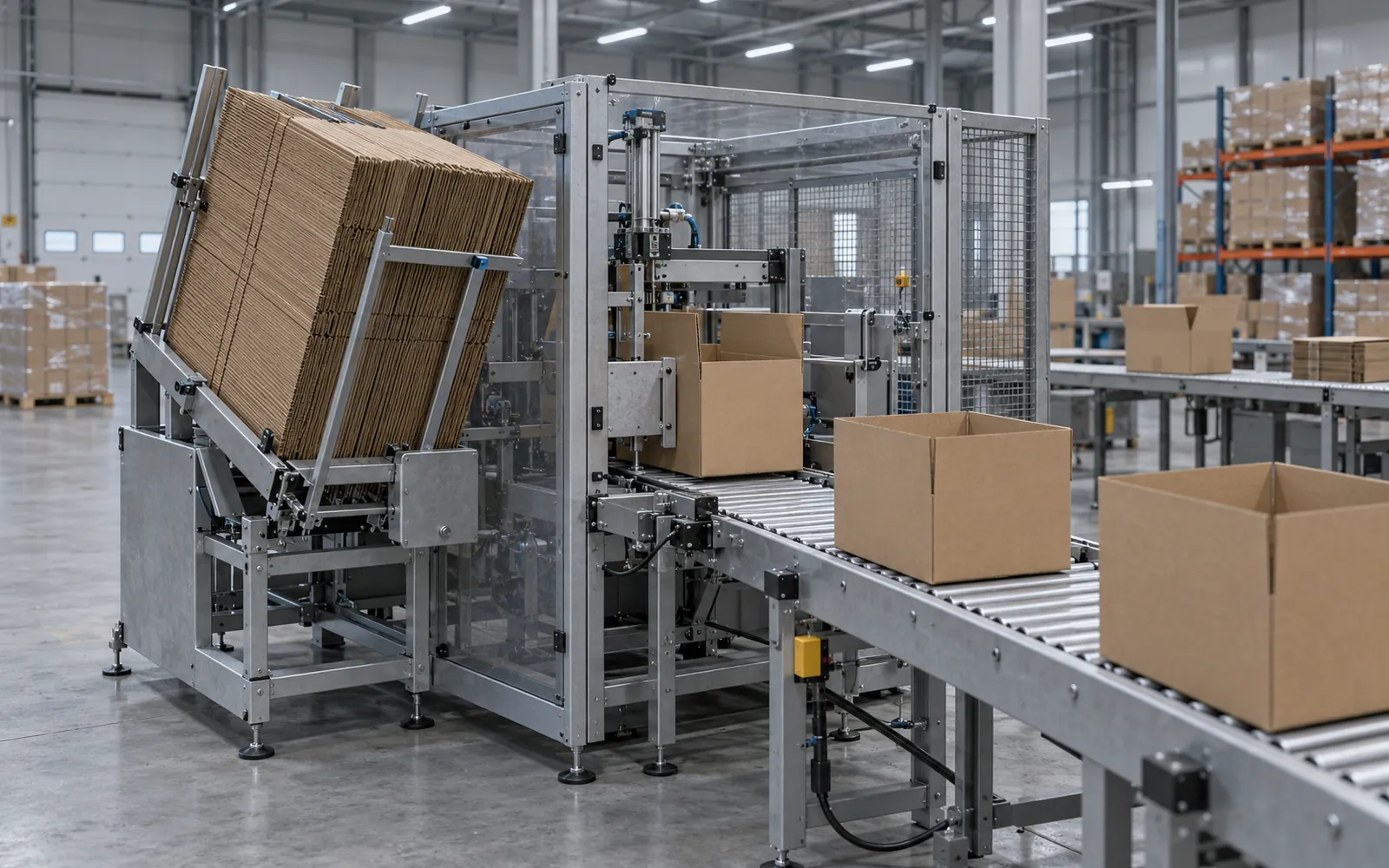
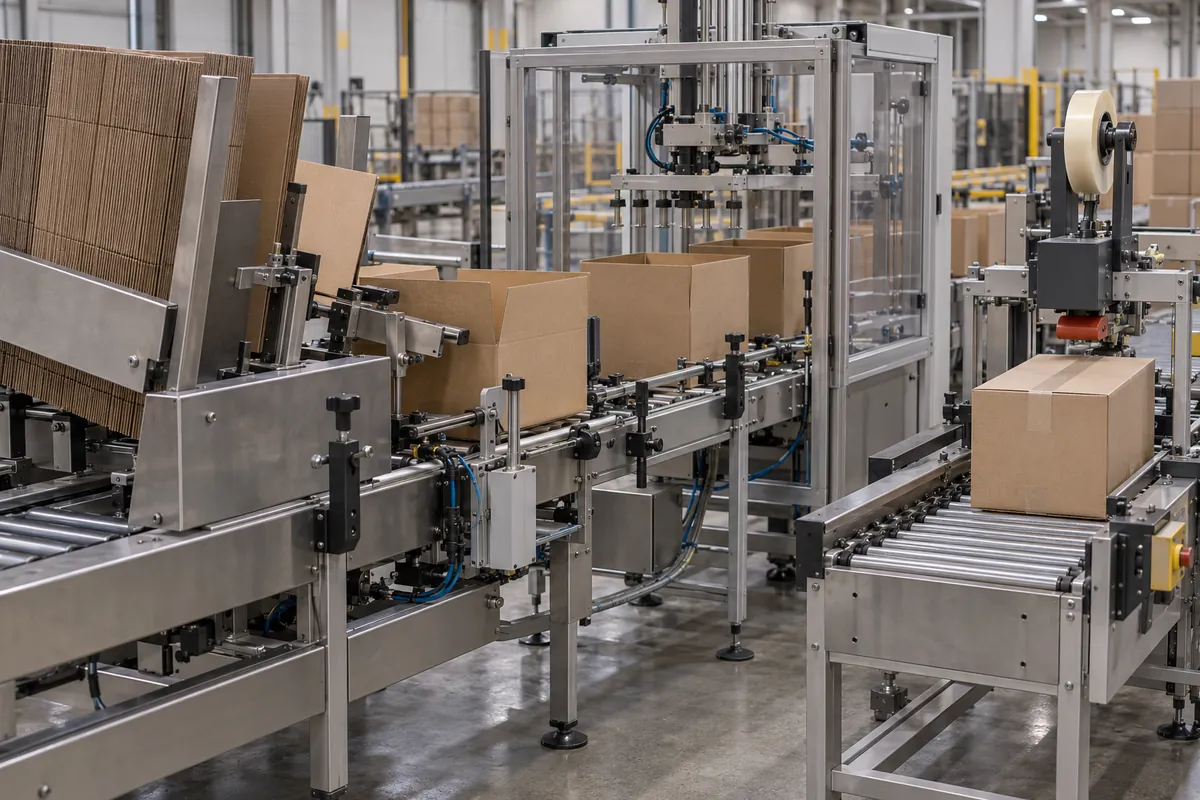
A case erector pulls a flat corrugated blank from a magazine, opens it, folds the bottom flaps, and closes them with tape or hot-melt adhesive. It supplies the case that the next machine fills. Erectors are often the first automated step because manual case forming is repetitive and sets the pace for hand packing. Case size range, magazine capacity, and how fast the machine can be adjusted between sizes are the main variables.
Case packing
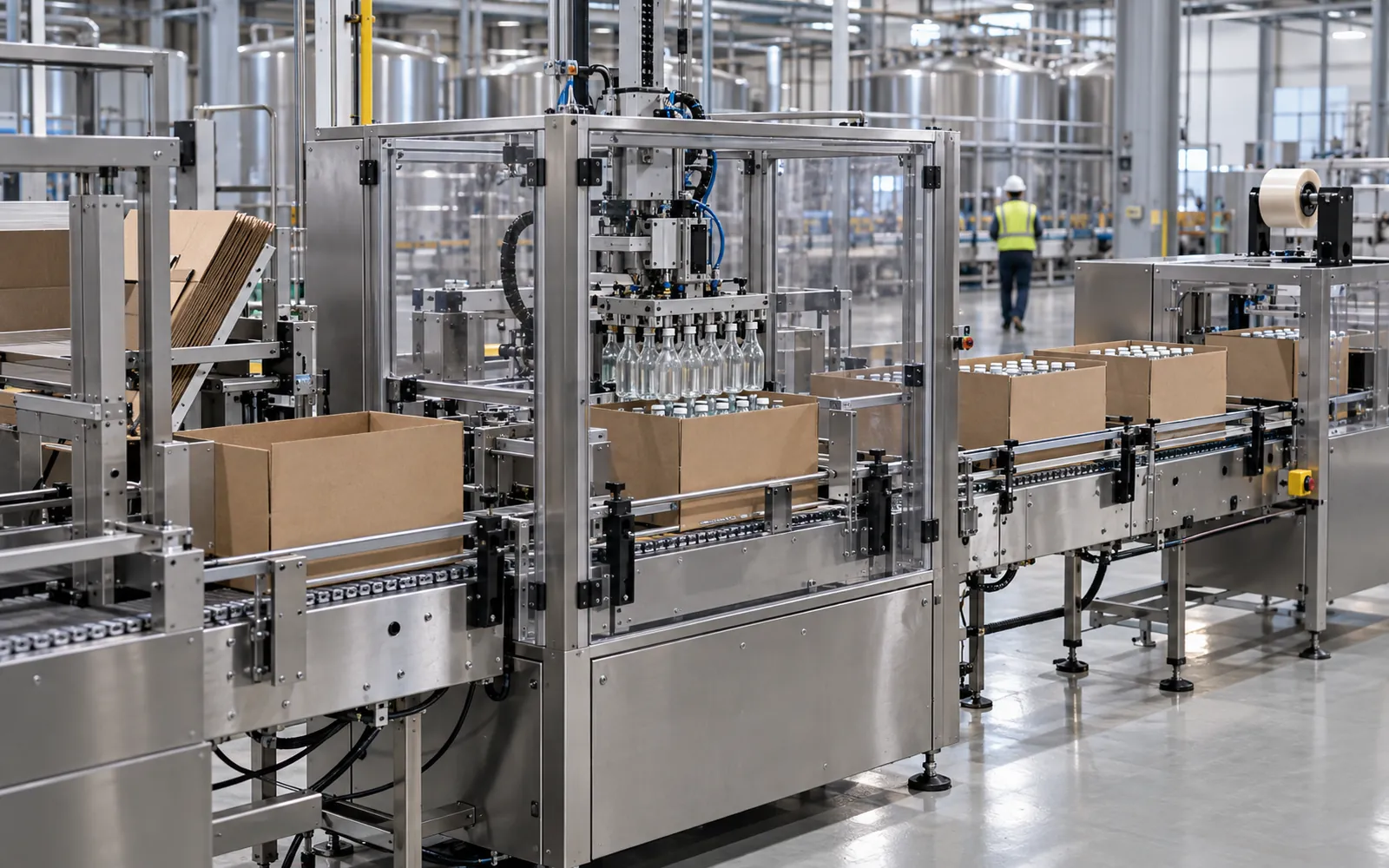
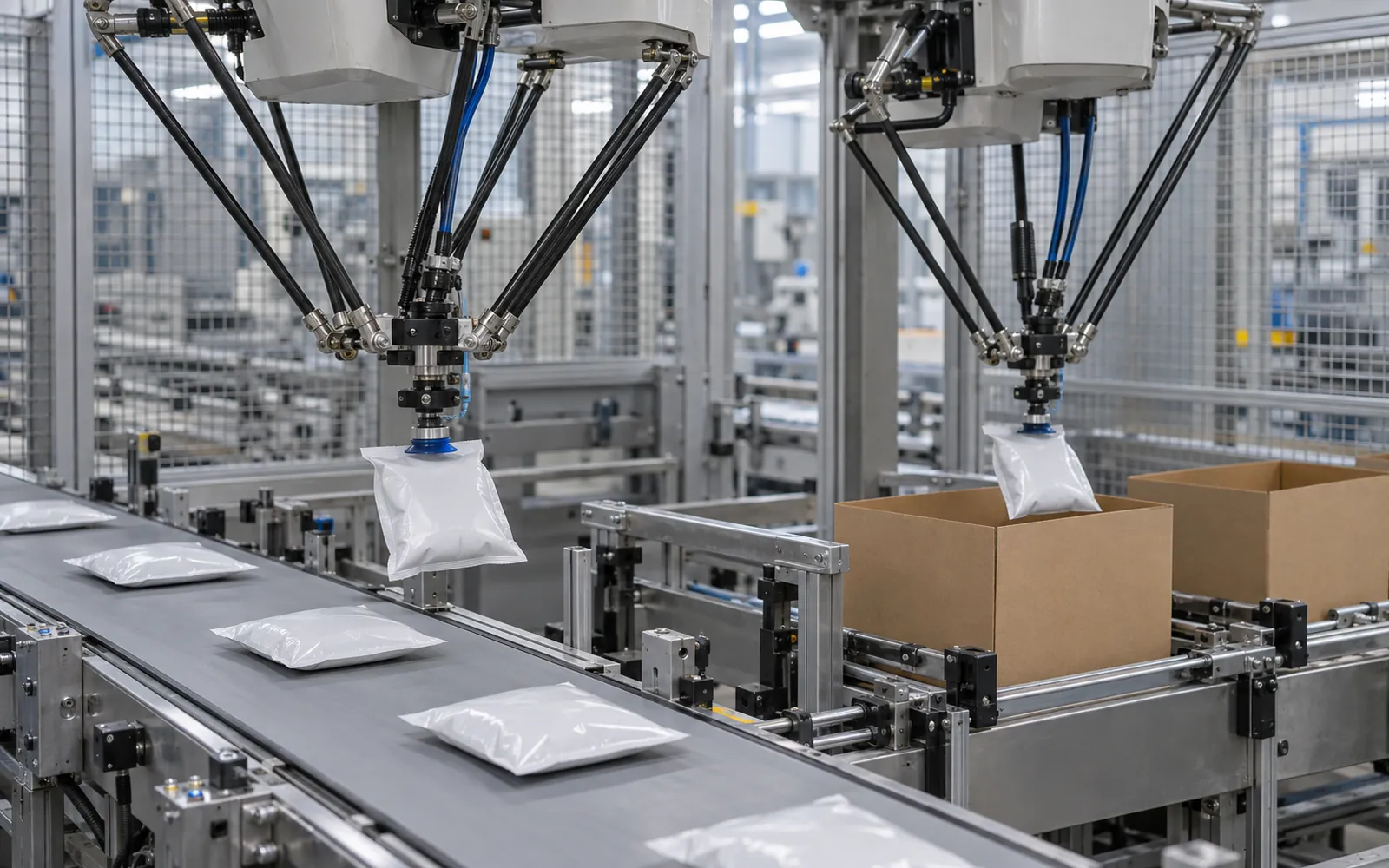
A case packer loads products into the case in a defined count and pattern. Top-load machines place or drop product from above, side-load machines push a group in through the side or end, and wraparound machines fold the case around the group. Robot-based packers handle mixed or delicate products and frequent pattern changes, and are covered in the guide to robotic case packing. The loading method follows from the product, the case style, and the required rate.
Case sealing
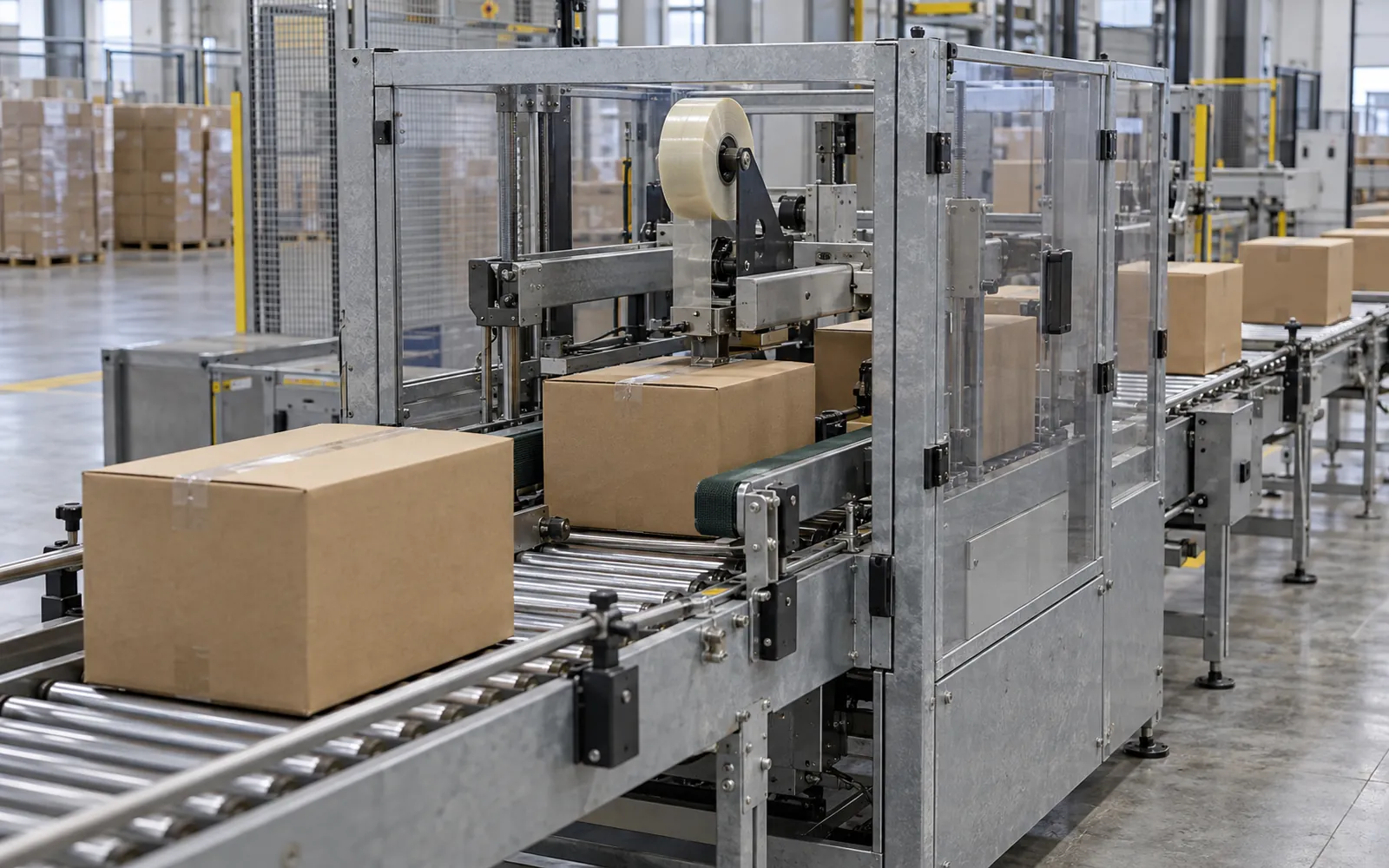
A case sealer folds and closes the top flaps, using tape, hot-melt adhesive, or in some cases staples or strapping. Consistent seals matter for stacking strength and for how cases behave on the palletizer. Some case packers include a closing station, while many plants use a separate sealer so that the packer and sealer can be sized and maintained independently.
Labeling and inspection
Cases usually need a label with a product code, lot, or shipping data. Print-and-apply labelers, label applicators, and inline scanners handle this step, often near the sealer. Checkweighers, metal detectors, and vision stations may sit before or after the case, depending on what is being verified. These stations add reject handling and data connections, which makes controls planning part of the early design.
Wrapping and bundling
Some products are grouped into shrink-wrapped bundles that go straight to a pallet, while others are bundled before they enter a case. At the pallet end, a stretch wrapper secures the load with film so it survives handling and transport. A wrapper must match palletizer output, because a load waiting for wrap blocks the machine behind it.
Palletizing
A palletizer builds sealed cases into a pallet pattern. Robotic, conventional, high-level, and low-level designs each fit different rates and package mixes. The palletizing systems section covers them in detail, and the case palletizer guide focuses on corrugated cases.
Quick selection table
The opening table follows a complete route rather than comparing stations with loading methods. The case packer comparison expands the loading choices.
The Standard-Knapp white paper, section “Line Speeds” (accessed October 8, 2026), discusses packer selection by speed band but gives no model-specific test conditions. This overview therefore uses no numerical rate bands. Specify a single-machine rate separately from sustained good cases leaving the complete line, including case reloads, rejects, changeovers, and pallet exchanges.
Takeaway: Compare routes against one product, case, and full-line measurement window.
How product flows through the system
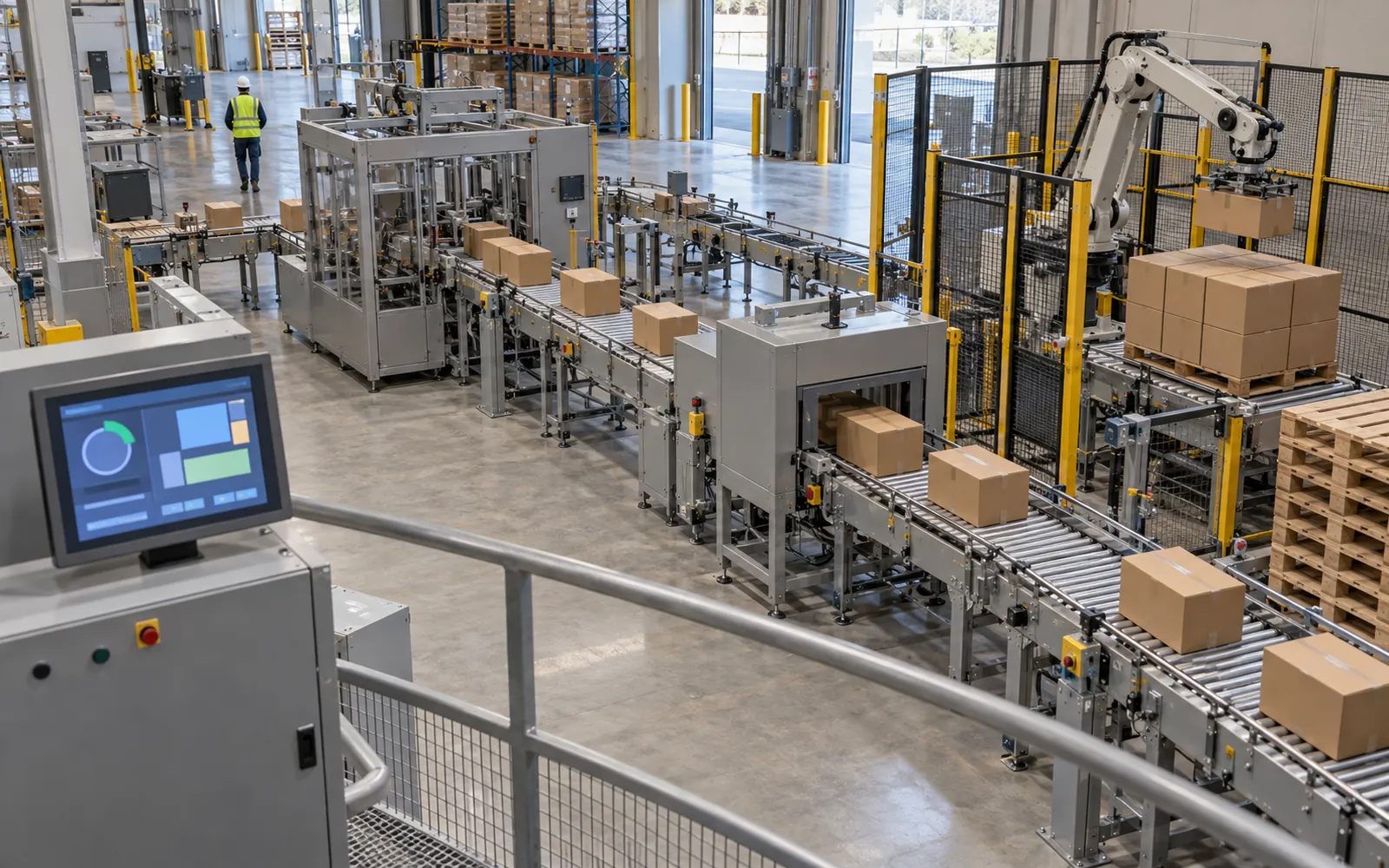
A typical flow has five stages, and each stage hands off to the next through a conveyor.
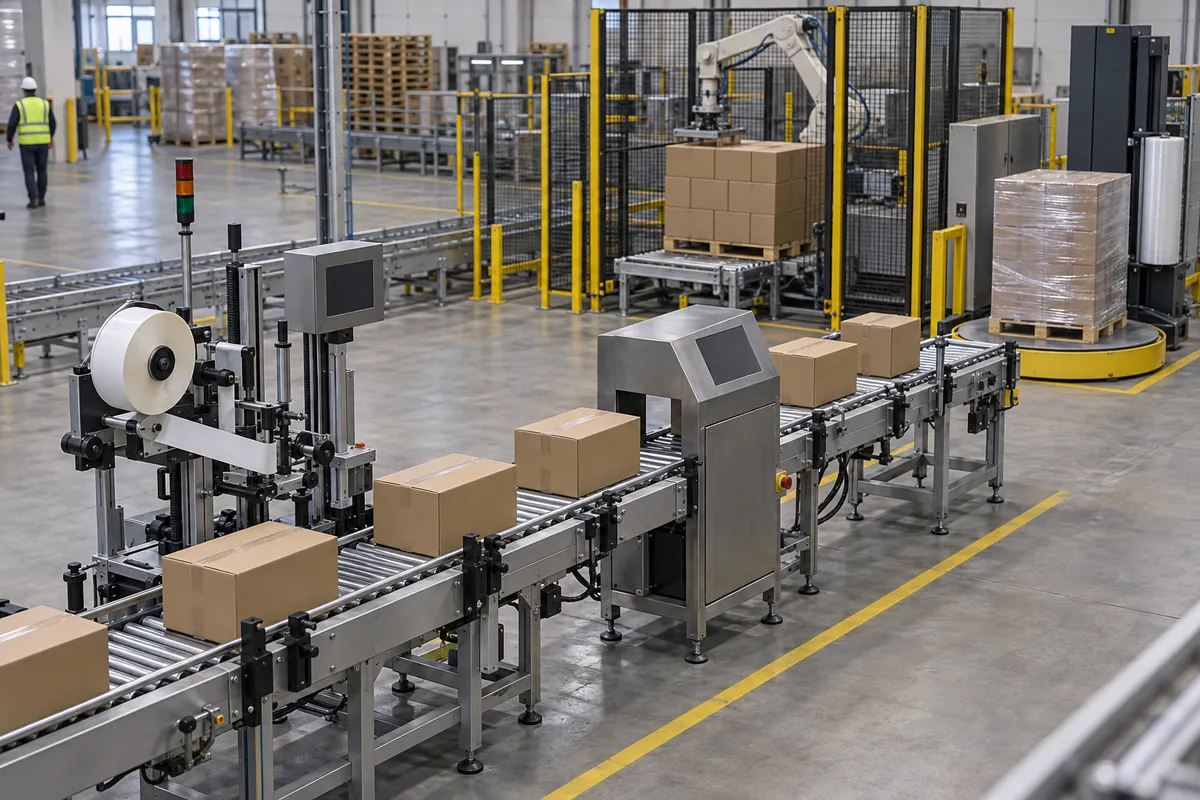
- Collation and infeed: primary packages arrive from the filler or wrapper, often in a single stream. Lane dividers, grouping stations, and accumulation conveyors turn the stream into the count and orientation the case packer needs.
- Case forming and packing: the erector supplies open cases. The packer loads the grouped product and passes the filled case on.
- Closing and identification: the sealer closes the flaps. A labeler or scanner applies and verifies the shipping label, and inspection devices reject cases outside weight or content limits.
- Palletizing: cases move on case conveyors to the palletizer, which turns and stacks them according to a stored or mechanical pattern.
- Wrapping and exit: the finished load goes to a stretch wrapper, a pallet label station, and then to storage or shipping.
Between stages, conveyors control spacing, orientation, accumulation, and transfer, and poor conveyor design can undermine well-chosen machines. The case conveyors and accumulation conveyors pages cover how those sections are specified.
Decision factors
Six factors separate one configuration from another.
Pack format and case style
A rigid bottle, a flexible pouch, a flow-wrapped bar, and a boxed carton behave differently under a drop, a push, or a fold. Case style is often set by the customer or the retailer, which can rule out a machine type before rate is discussed.
Required rate
Match the system to the highest sustained output of the upstream line, not the average. A packer that falls behind occasionally will back up the line behind it. Rates should be stated in the same unit across every machine, such as cases per minute, because products per minute and pallets per hour describe different things.
Changeover and SKU count
If formats change often, changeover time can matter as much as rated speed. Recipe-driven machines with servo adjustment can change formats from a screen, while machines with change parts need hands and time. Ask how long a changeover takes on the hardest product pair, not the easiest.
Floor space and layout
Footprint, ceiling height, conveyor heights, and operator access all limit the choice. Robot cells need guarding and a swept envelope, wraparound machines can be long, and top-load frames need overhead clearance. The packaging line layout guide covers how to test these constraints early.
Labor and uptime
The measured cost of manual packing, including turnover and training, is part of the business case. So is the cost of a stoppage. A line that runs several shifts needs equipment with accessible wear parts and clear fault messages. One engineering article on throughput stresses that frequent short stops often cost more output than rare long failures, so stability can matter more than raw speed.
Safety and controls
Machines in a system share guarding, interlocks, and a control approach. In the United States, packaging machinery is commonly assessed against ANSI/PMMI B155.1, which PMMI revised in 2023 and which guides suppliers and users through a documented risk assessment. Safety-related control functions are often designed to ISO 13849-1. Neither standard replaces a site risk assessment by qualified people, and each edition should be confirmed before specifying.
Stand-alone machines and combined units
Many of these machines come in two forms. A stand-alone machine does one job, such as erecting or sealing, and connects to its neighbors by conveyor. A combined unit folds two or three jobs into one frame, for example a packer that also forms and closes the case. Stand-alone machines allow each step to be sized, serviced, and replaced on its own, and they let a plant add equipment in stages. Combined units save floor space and reduce the number of conveyor transfers, but a fault in one function stops the whole frame. Some sources note that combining erecting, loading, and sealing tends to suit lower speeds, while higher-rate lines more often separate them. Ask each supplier which functions are included at the quoted rate.
Connections to the rest of the plant
End-of-line equipment depends on what happens before and after it. Upstream, packages must arrive in a controlled stream. Bottle conveyors and similar transport equipment feed the collation area, and the quality of that presentation sets how well any case packer performs. Downstream, loaded pallets move through palletizing and wrapping to storage or shipping.
The relationship also runs from the dock inward. Plants that receive packaging materials or product on pallets use depalletizing equipment at the head of the line, and a site that both builds and breaks down pallets can share pallet storage and routes. Two application pages show how the pieces stack in practice, case handling and pallet handling. Industry pages such as beverage packaging and food packaging describe the added requirements of those sectors, including sanitation and washdown.
For a project that spans several machines, the turnkey lines and line design pages explain how one design team can own the rate assumptions and the interfaces between machines.
A practical starting sequence
Before talking to suppliers, work through these points:
- Write down the primary package, case style, count per case, and pallet pattern for the hardest SKU.
- Set the sustained rate from upstream output, with allowance for growth.
- Count how many formats and changeovers the line sees each week.
- Measure floor space, ceiling height, and the height of existing conveyors.
- Record where the line stops today and for how long, by station.
- Decide whether labeling, inspection, and wrapping are in scope.
Takeaway: Choose a phased retrofit when one measured constraint can be improved with agreed case flow, ready/fault interfaces, and space reserved for the next phase. If the adjacent stations cannot accept its sustained output, include those interfaces in the same phase. Re-measure the constraint after each change; the automation guide covers staging.